FG Accounts for N15.8 Trillion from Fuel Subsidy Removal
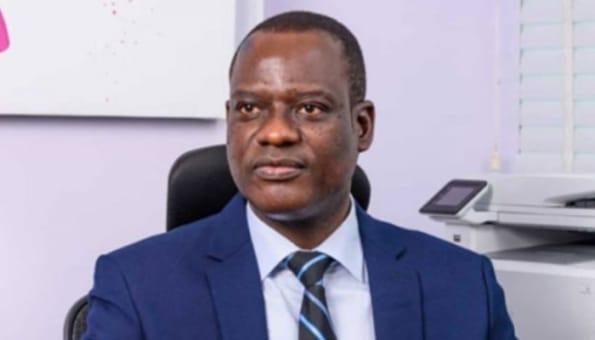
The Nigerian Federal Government has released a detailed account of how the N15.8 trillion generated from the removal of the petrol subsidy and foreign exchange reforms was distributed and spent across the federation from June 2023 to December 2025. This information was disclosed in the Federal Ministry of Finance’s Nigeria Reform Scorecard, presented on Wednesday, which indicated that the reforms yielded N15.8 trillion in subsidy savings for the nation during this period.
It was clarified that the entire N15.8 trillion did not go solely to the Federal Government. Instead, the funds were shared among the three tiers of government through the established statutory allocation system. The Federal Government received N5.4 trillion, constituting 34 percent of the total amount. States were allocated N6.5 trillion, representing 41 percent, while local governments got N3.9 trillion, which is 24 percent. This means that N10.4 trillion was collectively distributed to states and local governments, with the Federal Government's share being N5.4 trillion.
Taiwo Oyedele, the Finance Minister and Coordinating Minister of the Economy, further explained that these subsidy savings were not recorded as a distinct item labeled “subsidy savings” within the Federation Account. He stated, “Between June 2023 and December 2025, subsidy savings mobilised a sum of N15.8tn in resources for the Federation.” Oyedele clarified that the impact of the reforms was reflected through an increase in overall revenue collections. “So, the subsidy savings showed up in the Federation accounts by way of higher revenue collections as a result of the reforms,” he added.
Regarding the Federal Government’s N5.4 trillion share, the ministry's presentation revealed that this sum was part of a larger pool of additional resources available to the federal authority. The government also recorded N3.1 trillion in other incremental revenue, primarily sourced from remittances by government-owned entities. Furthermore, there was an incremental borrowing of N11.9 trillion. Cumulatively, these figures—N5.4 trillion from subsidy savings, N3.1 trillion from additional revenue, and N11.9 trillion from borrowing—brought the Federal Government’s total incremental resources to N20.4 trillion. Borrowing constituted the largest portion at N11.9 trillion (58 percent), followed by subsidy savings at N5.4 trillion (27 percent), and other revenues at N3.1 trillion (15 percent).
In terms of expenditure, the ministry reported that total incremental expenses during the specified period reached N30.64 trillion. The most significant expenditure was wage adjustments, totaling N9.39 trillion, which covered minimum wage increases, wage awards, and various allowances. External debt service accounted for the second-largest outlay at N9.37 trillion, with the ministry attributing this rise to the depreciation of the exchange rate. Strategic infrastructure development received N6.47 trillion, while the incremental cost of electricity subsidy amounted to N3.14 trillion. Domestic debt service, influenced by increases in the monetary policy rate, stood at N1.24 trillion. Other expenses included N423.8 billion for social welfare transfers, N419.1 billion for FCT development, the Ecological Fund, and natural resource investments, and N201.26 billion for higher naira costs associated with foreign obligations.
Addressing the funding gap, the ministry's figures indicated that the N30.64 trillion in total incremental expenses was not entirely covered by the N20.4 trillion in incremental resources. Specifically, N20.404 trillion was funded from these incremental resources, while the remaining N10.236 trillion originated from the existing revenue base. This implies that the Federal Government’s N5.4 trillion share of the subsidy savings was integrated into a broader N20.4 trillion pool of incremental resources used to finance various government expenditures.
The ministry also highlighted the perceived achievements of the reforms by comparing Nigeria’s current economic standing with a hypothetical scenario without the policy changes. It claimed that the debt service-to-revenue ratio had decreased from approximately 100 percent in 2022 to a projected 50 percent by 2026. Moreover, the number of states struggling to pay salaries is expected to drop from 27 in 2023 to zero by 2026. The government also reported improvements in foreign exchange reserves, increased capital importation, stronger GDP growth, and enhanced oil production. However, it acknowledged that household welfare remains a significant concern, with high poverty levels and a substantial increase in the cost of living following the reforms. The government’s immediate priorities include curbing inflation, maintaining a unified exchange rate, reducing poverty, enhancing food security, and ensuring that macroeconomic gains translate into tangible improvements in the living conditions of Nigerians.
Videos
Comments
(0)0/500 · No URLs or profanity allowed
Dis Federal Government don finally yarn us where dem carry the N15.8 trillion wey dem save from fuel subsidy go. Dem say na for wages, debt, and roads dem spend am, but people still dey feel the pinch for market. We just hope say all dis accounting go truly better the life of common Nigerians.
Source: Punch NG
Related Stories
FG: N15.8 Trillion Boost from Fuel Subsidy End, Forex Overhaul
Oyedele Calls on States to Boost IGR, End Allocation Reliance
Aliko Dangote Foundation Secures 20-Year Management of Kano Skills Acquisition Centre
NAFEM Records $1.41 Billion Turnover as FX Market Activity Surges
Femi Otedola Expands First HoldCo Stake with Fresh N20.7bn Share Buy