Dangote Refinery: Nigeria Supplies Bulk Crude, 22% Imported May-June
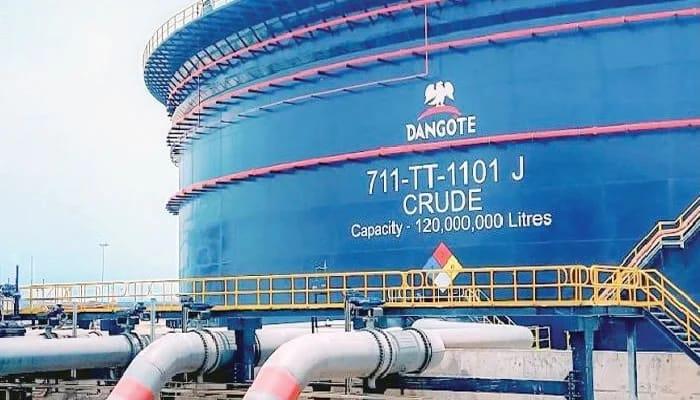
The Dangote Petroleum Refinery obtained a significant majority, approximately 78 percent, of its crude oil feedstock from the Nigerian National Petroleum Company Limited (NNPCL) and other local producers during the months of May and June 2026. This information stems from an analysis of the refinery’s official cargo discharge and pricing records for that two-month period, as reported by The PUNCH.
According to the data, nearly four out of every five barrels processed by the refinery originated from Nigerian crude grades. The remaining 22 percent of its total crude intake was imported from international sources, including Angola, Libya, Guyana, Ghana, and various global trading blends. The refinery released these figures to clarify and counter rumors suggesting that its pricing fluctuates daily in line with international crude oil prices. It emphasized that crude is procured weeks or even months in advance under contracts tied to monthly average pricing, rather than volatile spot market rates.
These crude inflow statistics reinforce Nigeria's position as the refinery's dominant supplier, despite increased imports from the aforementioned foreign nations. An examination of crude deliveries to the 700,000-barrels-per-day facility located in Lekki showed a total intake of 40.40 million barrels of crude during the May-June period. Of this volume, 31.43 million barrels were sourced from Nigerian fields, while 8.97 million barrels, representing about 22 percent of the total supply, were imported from foreign producers and international trading blends.
In May alone, the refinery received 21.47 million barrels. Nigerian crude grades constituted 16.74 million barrels, or 77.97 percent of that month's deliveries, with foreign barrels making up 4.73 million barrels, or 22.03 percent. Similarly, in June, local crude supply amounted to 14.69 million barrels, equivalent to 77.58 percent of the total feedstock, while imports contributed 4.24 million barrels, or 22.42 percent.
The domestic grades supplied to the refinery included Bonny Light, Qua Iboe, Forcados, Amenam, Bonga, Escravos, Agbami, Cawthorne, Okwori, Utapate, and ABO. The imported barrels featured Angola’s Cabinda crude, Libya’s El Sharara grade, Guyana’s Payara crude, Ghana’s Jubilee crude, CJ Blend, EA Blend, and other internationally traded blends, including cargoes delivered under the Chile Prosperity designation.
Among the foreign suppliers, Libya emerged as the largest source country, providing 2.10 million barrels, which accounted for 5.2 percent of the refinery’s feedstock. International trading blends, specifically CJ Blend and EA Blend cargoes, collectively contributed 2.95 million barrels, or 7.3 percent of total deliveries. Guyana supplied 1.02 million barrels of its Payara crude (2.5 percent of total intake), while Angola delivered 996,349 barrels (also approximately 2.5 percent). Ghana’s Jubilee grade added 956,001 barrels, equivalent to 2.4 percent of total supplies. Additionally, cargoes delivered under the Chile Prosperity trading designation amounted to 948,917 barrels, making up about 2.3 percent of the refinery’s total feedstock during the two-month review.
A detailed breakdown of individual crude grades supplied to the facility indicated that Bonny Light was the single largest feedstock during May-June, with total deliveries of 5.90 million barrels. Qua Iboe ranked second with 4.80 million barrels, followed closely by Amenam, which supplied 4.00 million barrels. Forcados crude accounted for another 3.89 million barrels, further highlighting the prominence of Nigerian grades in the refinery’s crude slate. Other domestic streams included Escravos (1.99 million barrels), Utapate (1.90 million barrels), Cawthorne (1.89 million barrels), Bonga (1.03 million barrels), Agbami (1.00 million barrels), and Okwori (418,462 barrels).
The data also revealed a significant decline in crude prices between May and June. In May, the refinery paid as much as $134.37 per barrel for certain Qua Iboe crude cargoes and $134.24 per barrel for Bonga, with the total value of crude deliveries for that month reaching approximately $2.68 billion. However, by June, prices had dropped considerably, with most cargoes trading between $90 and $97 per barrel, although Angola’s Cabinda crude was delivered at $123.30 per barrel. Total spending on crude purchases in June subsequently decreased to about $1.80 billion. This reduction in prices was attributed to a retreat in international oil prices due to concerns over slowing global demand, easing geopolitical tensions, and increased production from some major oil-producing countries. The lower prices have provided some relief to the refinery by reducing feedstock costs and potentially improving refining margins.
This latest information comes amid renewed efforts by the Federal Government and industry regulators to enhance the implementation of the domestic crude supply obligation framework, ensuring a steady feedstock supply to local refineries. The Dangote refinery had previously voiced concerns regarding difficulties in securing sufficient volumes of local crude, prompting it to increasingly source barrels from international markets. While the government has repeatedly expressed concerns over the inability of local refiners to secure adequate feedstock despite Nigeria’s status as Africa’s largest crude oil producer, these recent cargo records indicate that Nigerian crude remains the backbone of the refinery’s operations.
Olatide Jeremiah, the Chief Executive Officer of Petroleumprice.ng, commented on the development, describing the increase in domestic crude supply to the Dangote refinery as a positive sign for Nigeria’s refining sector and an indication that the government was paying greater attention to local refineries. Jeremiah stated, “For me, it is quite impressive that the crude feedstock from indigenous producers has increased significantly to over 70 per cent. It shows that the government is quite concerned about local refineries and the inflow of Nigerian crude to the Dangote refinery.”
Gallery
Comments
(0)0/500 · No URLs or profanity allowed
E be like say Dangote Refinery don dey focus well-well on our own crude oil, as dem don get almost 80% from local producers. This one na good news for Nigeria o, e go help our economy and show say government dey serious about local content.
Source: Google Trends Nigeria
Related Stories

Middle East Instability, AstraZeneca Setback Pull Down London's FTSE 100

European Q2 Earnings: Energy Sector Fuels Growth Despite Market Slowdown

Brussels Unveils Procurement Rules to Prioritize European Businesses

Economic Pressures, Not Feminism, Driving Down Global Birth Rates, UN Reports
Aliko Dangote Kicks Off $17bn Mega-Refinery Project in Kenya