Aliko Dangote Kicks Off $17bn Mega-Refinery Project in Kenya
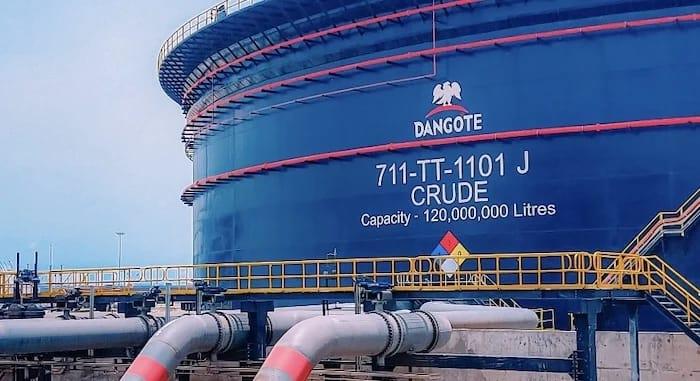
Dangote Industries Limited has initiated preliminary work on its planned $17 billion, 700,000-barrels-per-day refinery in Kenya. This move marks a significant step towards what is expected to become East Africa's largest refining venture. The company confirmed that the project has moved beyond the initial planning stage, with a site already selected, soil tests currently underway, and engineering and design activities progressing in anticipation of construction.
Reuters reported that this refinery, to be located on Lamu Island off the Kenyan coast, is projected to be completed in approximately three years. Its objective is to supply refined petroleum products to Kenya and surrounding nations, thereby decreasing East Africa's reliance on imported fuels. This development follows a Bloomberg report on Tuesday, which indicated that Aliko Dangote, President of the Dangote Group, intends to construct the refinery at an estimated cost of up to $17 billion as part of his strategy to expand his refining operations across East Africa.
Citing a spokesperson for Dangote Industries Ltd., Bloomberg stated that the proposed facility would emulate the company's refinery in Lagos, Nigeria, and be capable of processing about 700,000 barrels of crude oil daily once operational. The report read: “A new mega-refinery to be built at the Kenyan coast by Africa’s richest person will cost as much as $17bn, a spokesman for Dangote Industries Ltd. has confirmed. Billionaire Aliko Dangote personally pledged to the leaders of Kenya and Uganda that he would set up a replica of his 700,000-barrel-a-day refinery outside Lagos in East Africa. The refinery would take about five years to build.”
The report further detailed that Dangote personally assured the Presidents of both Kenya and Uganda of his commitment to establishing the refinery in East Africa. It also recalled that Kenyan President William Ruto had announced in May that Dangote would commence the refinery's construction within the current year.
Speaking to Reuters, Devakumar Edwin, Dangote Industries’ Vice President for Oil and Gas, confirmed substantial progress on the initiative. He remarked, “The site has been selected, soil tests are underway, and design and engineering work has commenced. Kenya was the choice from the beginning.”
Bloomberg's report also quoted Dangote explaining that Lamu, a coastal town in southeastern Kenya, was chosen as the preferred location for “commercial and technical reasons,” although he did not provide further specific details. The report added that Tanzania had initially been considered as a potential site for the refinery before Kenya emerged as the final selection.
This project represents the Dangote Group's most significant refining investment outside Nigeria and forms part of the company's broader ambition to increase refining capacity across Africa, following the successful launch of operations at its 650,000-barrels-per-day refinery in Lagos.
Devakumar Edwin disclosed that the refinery's financing would come from a combination of internally generated cash, bonds, and proceeds from the company’s planned initial public offering. He, however, declined to state the exact cost of the project, mentioning only that it would be comparable to the expenditure on the Lagos refinery. The Lagos refinery, built by Aliko Dangote, ultimately cost over $20 billion before commencing operations in 2024.
Reuters had previously reported that the Lagos project was initially estimated at approximately $9 billion in 2013, but its costs escalated due to factors such as site relocation, engineering challenges, currency depreciation, the COVID-19 pandemic, and global inflation.
This investment coincides with Dangote's concurrent ambitious expansion efforts in Nigeria, where the Lagos refinery's capacity is set to double from 700,000 barrels per day to 1.4 million barrels per day by 2028. Upon completion, the Nigerian complex is expected to rank among the world's largest refining facilities.
Dangote Industries Limited has also unveiled plans to boost its total refining capacity to 2.1 million barrels per day across Nigeria and Kenya, aligning with its long-term strategy to expand its footprint throughout Africa. Edwin shared this information during a recent visit by a delegation from the Republic of the Congo’s national oil company, Société Nationale des Pétroles du Congo, to the Dangote Petroleum Refinery in Lagos.
He elaborated that this expansion would elevate the group's overall refining capacity to 2.1 million barrels per day, comprising 1.4 million barrels per day in Nigeria and the planned 700,000-barrels-per-day refining complex in Kenya, designed to cater to East African markets. He further disclosed the group's intention to invest an additional $46 billion between 2026 and 2028 across its refining, cement, and fertiliser operations, as part of its initiative to accelerate industrialisation across Africa.
The proposed Kenyan refinery underscores a growing recognition across Africa that local refining is increasingly vital for ensuring energy security, conserving foreign exchange, and fostering industrial development. For decades, despite producing millions of barrels of crude oil daily, Africa has remained heavily reliant on imported refined petroleum products due to insufficient refining capacity.
Data indicates that while Africa accounts for approximately seven percent of global crude oil production, the continent's refining capacity has decreased by about one-third over the past two decades. This decline is attributed to ageing refineries suffering from years of underinvestment, operational inefficiencies, and inadequate maintenance.
The commissioning of the Dangote refinery has begun to reverse this trend. The refinery achieved full operational capacity just before the recent Middle East tensions involving Iran, significantly helping Nigeria reduce its dependence on imported petrol and other refined products while improving domestic fuel availability. Its success has reignited interest among African governments and private investors eager to replicate this model elsewhere on the continent.
Beyond Kenya, several nations are now pursuing similar projects to bolster their domestic refining industries. In Mozambique, Nigerian businessman Benedict Peters has expressed interest in developing a proposed 200,000-barrel-per-day refinery, while Uganda is advancing plans to construct a 60,000-barrel-per-day refinery to satisfy domestic demand and supply neighbouring markets in Kenya and Tanzania.
According to the African Petroleum Producers’ Organisation, Africa currently exports roughly three-quarters of its crude oil production while importing approximately 70 percent of the refined petroleum products consumed across the continent. This imbalance continues to expose African economies to volatile international fuel prices, high transportation costs, and foreign exchange pressures.
Consequently, the planned Kenyan refinery is anticipated not only to bolster East Africa’s energy security but also to deepen regional trade in refined petroleum products, lessen import dependence, and stimulate industrialisation throughout the region. Africa possesses extensive crude oil reserves but has historically lacked sufficient refining infrastructure to process its output locally. As a result, many oil-producing countries export crude oil and import costly refined petroleum products, making their economies vulnerable to global supply disruptions and price fluctuations.
The launch of the 650,000-barrel-per-day Dangote Petroleum Refinery in Nigeria marked a significant transformation in the continent's refining landscape, boosting local fuel production and encouraging African governments to prioritize investments in domestic refining capacity. The proposed Kenyan refinery stands as one of the continent's most ambitious downstream initiatives and could substantially reconfigure fuel supply dynamics in East Africa while advancing the African Union’s broader goals of industrialisation and regional energy integration.
Gallery
Comments
(0)0/500 · No URLs or profanity allowed
Dangote don carry him refinery dream go Kenya, say na to help East Africa stop importing fuel. If this one work like the one for Lagos, e go really boost Africa economy and energy independence. We dey watch to see how e go play out.
Source: Punch NG
Related Stories

Economic Pressures, Not Feminism, Driving Down Global Birth Rates, UN Reports
LASCOPA Tags 238 Lagos Retailers for Consumer Safety Lapses

SpaceX Stock Dip Slashes Elon Musk's Fortune by Over $50 Billion
Oshiomhole Pushes FG to Appropriate S'African Company Profits for Xenophobia Victims

Alleged Fraud Probe Hits Zimbabwean Businessman Richard Ngwenya in South Africa