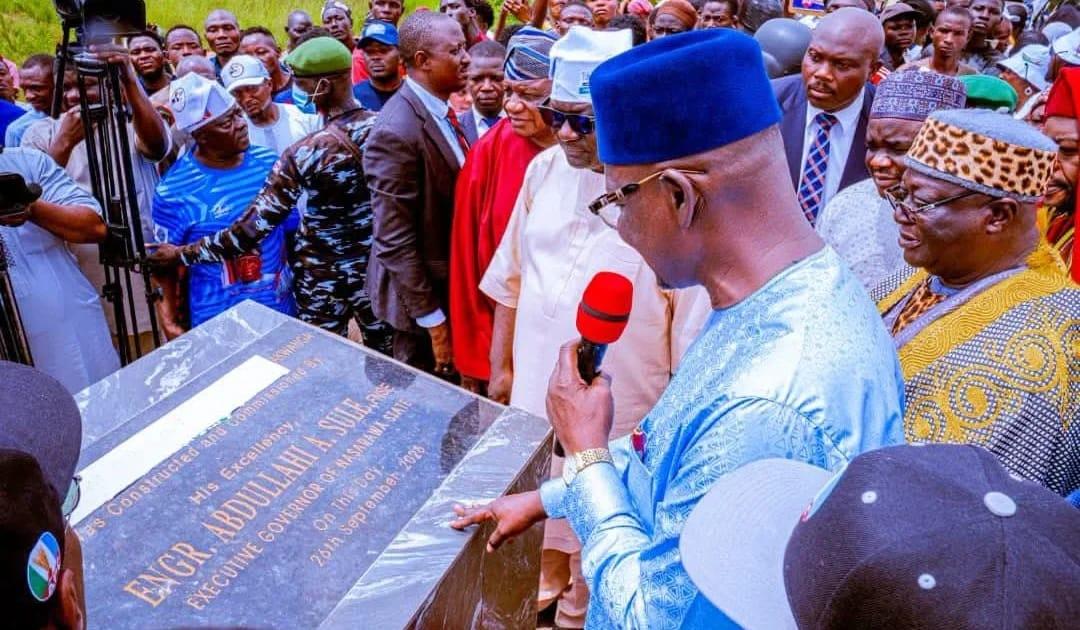
Adamu Adaji Reveals Hurdles in Resolving Edo-Kogi Boundary Standoff

Full Story
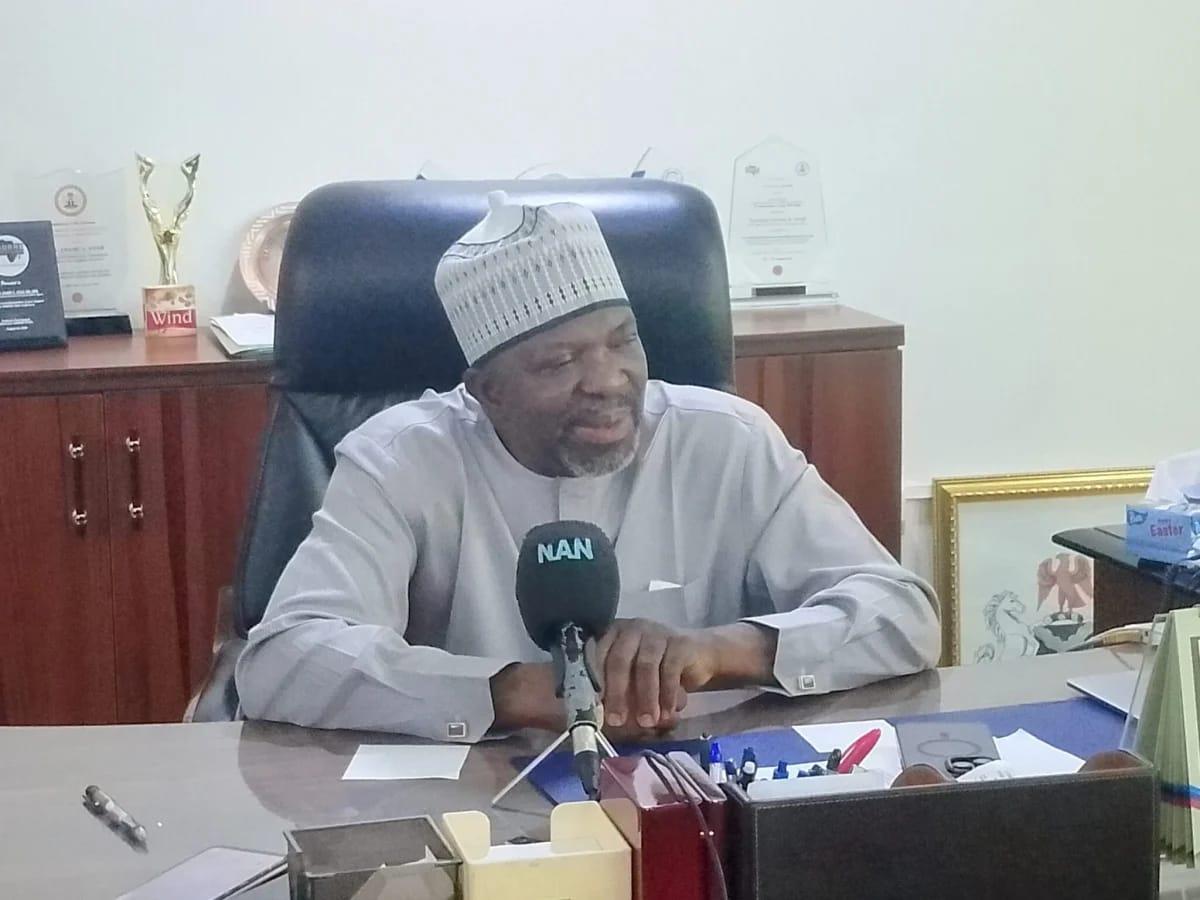
Adamu Adaji, the Director-General of the National Boundary Commission (NBC), has shed light on why the long-standing boundary disagreements between Edo and Kogi states persist. According to Adaji, the failure to resolve these disputes stems from the disappearance of crucial geographical markers, conflicting territorial assertions, and opposition from local communities. He made these remarks during an exclusive interview with the News Agency of Nigeria (NAN) in Abuja on Sunday.
Adaji explained that despite the NBC's technical and administrative endeavors leading to an agreed boundary line, its physical establishment has been met with resistance from communities situated along the affected areas. On a more positive note, he mentioned that the commission had made headway in the Abia-Anambra boundary resolution, where 15 out of a total 23 kilometers have been successfully agreed upon.
The NBC boss elaborated that the original delineation of the Edo-Kogi boundary was established by Legal Notice No. 126 of 1954, a document that historically defined the demarcation between Nigeria's then-Northern and Western regions. However, many of the physical landmarks cited in this historical record have vanished over the years, posing a significant challenge for experts attempting to precisely trace the boundary today.
He further stated that while technical experts have tried to interpret these historical documents, the absence of these key landmarks has introduced an element of subjective interpretation into the boundary determination process. Adaji noted, “This has led the parties to continue laying claims in different areas,” recalling that attempts to establish this boundary date back as far as 2006.
After reviewing the arguments presented by both states, the commission ultimately established a line designated as the official boundary between Edo and Kogi. This proposed boundary subsequently received approval from the Internal Boundary Committee, setting the stage for its physical demarcation.
Nevertheless, the NBC boss revealed that the demarcation process hit a snag when the appointed contractor began work to physically mark the approved boundary. Communities residing along the boundary corridor voiced their strong objections, asserting that the proposed line did not align with their traditional understanding of where the boundary lies.
“The affected communities consequently resisted the demarcation, prompting the commission to engage stakeholders and seek broader agreement,” Adaji stated. He added that stakeholders reconvened earlier this year to discuss strategies for physically implementing the approved boundary and to evaluate its potential impact.
The previous agreement faced renewed challenges when some parties reportedly withheld full cooperation and presented new documents that suggested potential alterations to the boundary. Adaji highlighted, “Some documents included court judgments that have not previously been brought to the commission’s attention. We have to examine these issues and engage the states so that we can arrive at a common understanding.”
The Edo-Kogi boundary resolution process is still in progress, Adaji confirmed, noting that the commission is committed to commencing demarcation once the necessary resources are secured. “We are still looking for the resources to undertake it. Where challenges arise, we will address them as we encounter them,” he affirmed.
NAN reports that the contentious Edo-Kogi boundary areas include Ogori–Ekpedo, Okene–Okpella, and the Ake axis, where both the interpretation and physical demarcation of the boundary remain disputed. Additionally, the NBC is simultaneously working to resolve farmland disputes between Ibaji communities in Kogi and Uloshi/Esan South-East in Edo, alongside the larger interstate boundary exercise.
Shifting focus to the Abia-Anambra boundary, Adaji observed that these two states share deep cultural and ethnic connections, with communities on either side maintaining robust social ties. He clarified that their boundary originated from colonial-era administrative divisions that lacked sufficient documentation or clear definitions, thus giving rise to conflicting claims.
“Abia-Anambra boundary stretches about 23 kilometres, with the two states agreeing on 15 kilometres, leaving approximately eight kilometres unresolved,” Adaji stated. He explained that communities within this outstanding 8-kilometer stretch continue to assert strong claims and counterclaims over specific territories. He further noted that one state might accuse communities from the other of developing contested land to give the impression of annexation.
Adaji mentioned that the commission has successfully secured the commitment of both states to support efforts geared towards resolving the remaining 8-kilometer portion. He confirmed that representatives from Abia and Anambra met with the commission in July, where they agreed to back fieldwork aimed at re-establishing the contested boundary.
He indicated that this fieldwork might initially result in two distinct lines representing each state's claims, with the ultimate goal of converging on a single, clearly defined boundary. “These are essentially the same people. They have intermarried, carry out many activities together and speak the same language,” Adaji remarked, emphasizing the close ties between the communities.
NAN reports that the core of the Abia-Anambra dispute is concentrated in the Umunneochi-Orumba South area, specifically around Umuaku, Ezioba, and Owerre-Ezukala. While the overall boundary spans approximately 23 kilometers, the NBC has successfully delineated 15 kilometers, leaving about 8 kilometers unresolved. This outstanding portion involves Ezioba–Umuaku and adjacent Anambra communities, awaiting final demarcation. Adaji appealed for cooperation from all communities, highlighting the commission's efforts to foster understanding and collaboration among states, local governments, and those living in boundary regions. He further advised governments and stakeholders to safeguard the property rights of individuals residing along these borderlines.
Gallery
Comments
(0)0/500 · No URLs or profanity allowed
Edo-Kogi boundary wahala don too tey! NBC DG talk say na disappearing landmarks and community fight dey cause am. Make dem sha find solution quick quick, because na innocent people property rights dey suffer for dis kind long dispute.
Source: Punch NG
Related Stories

Ibadan Indigenes Demand Issue-Based 2027 Campaigns from Oyo Politicians — full story

APC Chieftain Advises Wike: Focus on FCT Governance, Staff Welfare, Not Political Brawls
Mushin Mourns Influential Figure: A Look at Baba Alado's Enduring Legacy
APC Chieftain Calls on Tinubu to Bolster Poverty Alleviation Efforts
Abia North Stakeholders Rally Support for Governor Otti's 2027 Bid