Expert Dietitian Simplifies Milk Choices: Dairy, Non-Dairy, and More Explained
Full Story
Gone are the days when buying milk was a straightforward task. Shoppers today often find themselves spending considerable time in the dairy section of supermarkets, confronted with a myriad of options that can be confusing. Tito Ipinmoye, a dietitian, recounted an experience where she observed a young couple perplexed by the array of milk products, struggling to decide between dairy and non-dairy alternatives, and even within dairy, the distinction between Full Cream and Filled Milk.
Ipinmoye intervened, offering her professional insight, which quickly clarified their dilemma, enabling them to make an informed choice. This encounter underscored a common observation in her practice: many consumers mistakenly believe 'milk is just milk,' despite the diverse offerings now available.
The initial decision for many consumers is whether to opt for dairy milk or a plant-based alternative. For those who choose dairy, understanding the differences between products like Full Cream Milk, Filled Milk, and age-specific formulas is crucial for selecting the most suitable option. However, these distinctions are not always evident to the average shopper, leading many to base their decisions on factors like brand familiarity, price, or attractive packaging rather than nutritional understanding.
Making informed food choices, Ipinmoye explains, often starts with simply comprehending what you are purchasing.
**Understanding the Primary Milk Categories**
The milk aisle, though seemingly complex, can be simplified into two main categories: Dairy milk and non-dairy milk. Dairy milk, typically sourced from cows (though goat's and sheep's milk are also consumed globally), is a natural provider of high-quality protein, calcium, and essential vitamins and minerals vital for growth, strong bones, and general well-being.
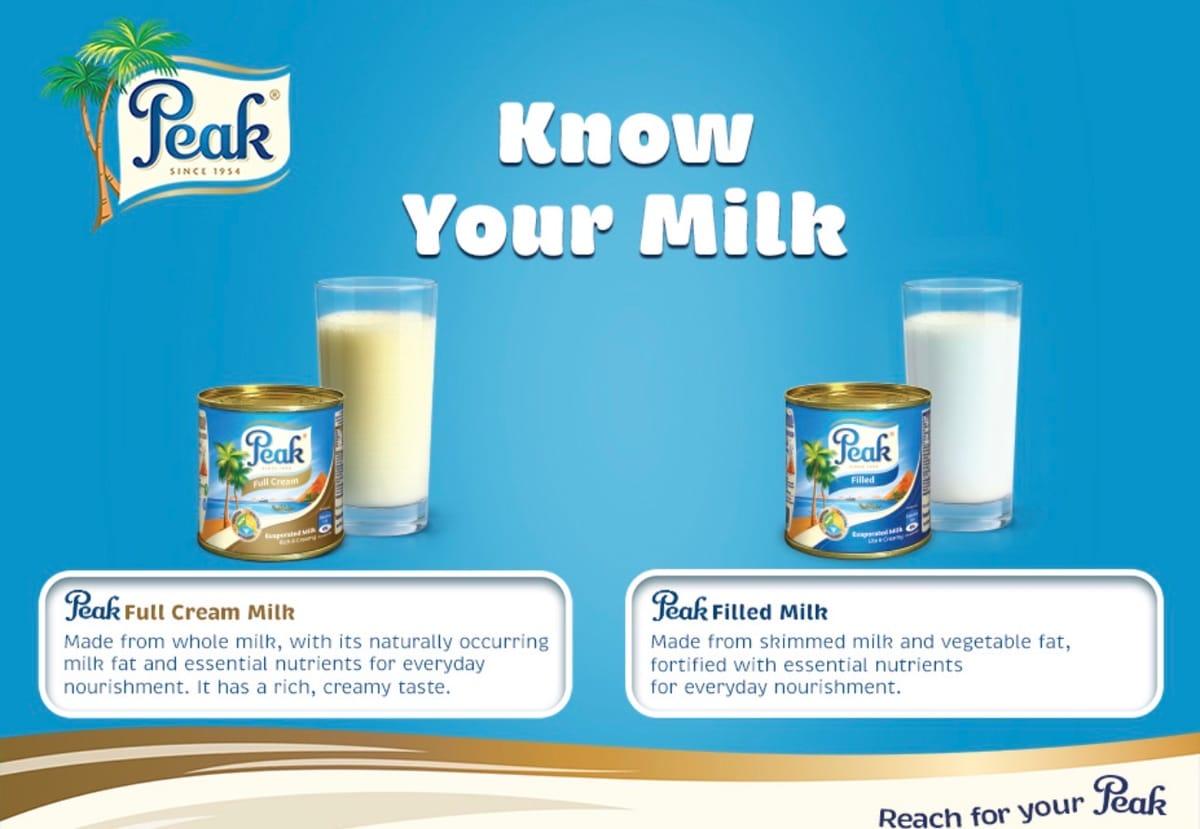
For consumers leaning towards dairy milk, further distinctions exist. Not all dairy products are identical. Within the dairy segment, Full Cream Milk and Filled Milk are the most prevalent options. While both are dairy-based and supply important nutrients, their fat compositions differ, catering to distinct nutritional requirements and consumer preferences. Grasping these variations is the next step in choosing the appropriate milk.
**Navigating Your Dairy Options**
Ipinmoye noted that the couple she assisted wasn't merely picking a brand but trying to understand which dairy milk best suited their needs. Once a consumer decides on dairy milk, the next step involves understanding the specific dairy products available. For instance, brands like Peak offer Full Cream Milk, Filled Milk, and Peak 456 Growing-Up Milk. Each product, though dairy-based, is formulated for different nutritional purposes and life stages.
Rather than viewing them as mere variations, it’s helpful to see each product serving a unique function. Peak Full Cream Milk is designed to offer comprehensive dairy nutrition for daily family consumption. Peak Filled Milk provides an alternative dairy option with a different fat profile, yet still delivers vital nutrients like protein and calcium. Peak 456 Growing-Up Milk is specifically tailored to meet the nutritional demands of children aged four to six years. Knowing the intended purpose of each product greatly simplifies the selection process.
Comments
(0)0/500 · No URLs or profanity allowed
E be like say choosing milk don turn serious wahala for market, with so many options now. But dis dietitian don try well-well to clear air on top wetin be full cream, filled, and even growing-up milk. Na good guide to sabi wetin you dey buy for your family health!
Source: Linda Ikeji's Blog
Related Stories

Anaesthesiologists Ask FG for More Equipment, Funds to Boost Surgical Safety

Nigeria's Health Insurance Authority Ups Hospital Payments by 373%

Nigerian Woman Alleges Doctors Use ChatGPT for Patient Diagnoses in Hospitals

Aid Worker Calls for Justice as Catechist Accused of Defiling Girl, Father Abandons Case in Abakaliki

Osun Police Command Boosts Personnel Mental Wellness with Awareness Lecture