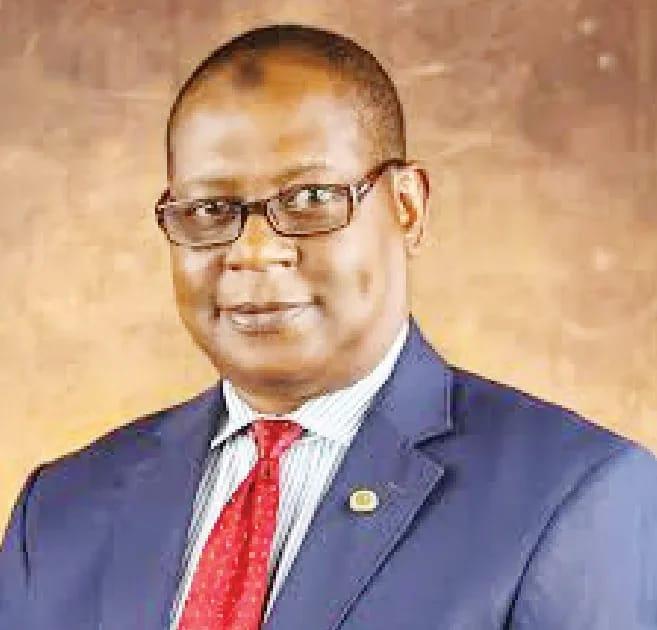
Akinwunmi Adesina: Nigeria Must Prioritise Health as Economic Investment

Full Story
Akinwunmi Adesina, the former President of the African Development Bank (AfDB), has strongly advocated for treating healthcare spending as an economic imperative rather than just a social welfare initiative. He stressed that its crucial role in national productivity and overall development necessitates that all levels of government and the private sector view healthcare as a strategic investment.
Adesina made this assertion during his virtual keynote address at the Private Sector Health Alliance of Nigeria's (PSHAN) 2026 Annual Awards and Gala Night, held in Lagos on Saturday. He emphasized the need for Nigeria to transition from isolated, philanthropic private-sector health interventions to a more coordinated, long-term investment approach aimed at fortifying healthcare delivery nationwide. According to Adesina, Nigeria cannot hope to achieve its economic aspirations while remaining reliant on other nations for essential medicines, vaccines, diagnostic tools, and medical equipment.
“Health is not merely a social sector expenditure. It is an investment in human capital, an essential economic investment. There can be no wealthy nation without a healthy population,” Adesina stated. He implored the private sector to leverage its capital, technology, expertise, and innovative capacity to construct resilient healthcare systems, reiterating that the government alone cannot bear this monumental responsibility. The former AfDB head maintained that private sector involvement must extend beyond short-term projects to comprehensive partnerships with well-defined objectives, robust accountability frameworks, and quantifiable results.
Adding to the discourse, Dr. Salma Ibrahim-Anas, the Special Adviser to the President on Health Policy, highlighted the private sector's significant role, noting that 82 percent of Nigeria's secondary healthcare facilities are privately owned. She affirmed that stronger private sector contributions and enhanced collaboration are vital for the success of the ongoing federal health reforms. Ibrahim-Anas explained that the Federal Government’s Nigerian Health Sector Renewal Investment Initiative is designed to shift the country away from disparate interventions towards a streamlined, results-oriented healthcare system.
She clarified that the efficacy of these reforms would be measured by tangible improvements such as better access to quality healthcare, reduced financial burdens for patients, improved maternal and child survival rates, and stronger health security, rather than merely the number of policies implemented. “Our challenge is to move from policy commitments to disciplined execution and measurable results,” she asserted. Dr. Ibrahim-Anas identified several key areas requiring increased private sector investment, including primary healthcare revitalization, health financing and insurance, local manufacturing of pharmaceuticals and medical equipment, digital health innovation, and workforce development. She urged private organizations to align their investments with government priorities and ensure that any adopted or renovated facilities are seamlessly integrated into existing state healthcare systems.
Meanwhile, Ousmane Diagana, the World Bank Group’s Regional Vice President for Western and Central Africa, represented by the Bank’s Health Specialist, Dr. Olumide Okunola, warned that Nigeria's demographic potential would only translate into economic prosperity if sufficient investments are made in the health of its populace. Diagana cautioned that high maternal and child mortality rates, inadequate healthcare infrastructure, insufficient funding, and a shortage of health workers pose significant threats to the nation's capacity to convert its growing population into a future productive workforce. He underscored that clear policies and effective implementation frameworks are prerequisites for attracting private sector participation, citing the expansion of the government’s health compact to include private sector partners in 2025. He also emphasized the inclusion of private sector stakeholders in the execution of the health sector renewal initiative, stating, “This needs to be jointly delivered between the public and private sector.”
In a video message, Dr. Amunda Iziawonga, the United Nations Under-Secretary-General and Special Adviser on Africa, urged business leaders to prioritize long-term investments that bolster public healthcare institutions. She stressed that healthcare facilities require more than just buildings and equipment, highlighting the critical importance of trained personnel, reliable medicine supplies, sustainable financing, and integration within the broader health system. Iziawonga commended PSHAN for successfully uniting businesses, government, financial institutions, development partners, and healthcare professionals to channel private resources towards national and local healthcare priorities. Earlier, Dr. Tinuola Akinbolagbe, PSHAN’s Managing Director and Chief Executive Officer, affirmed the alliance's commitment to advancing private-sector partnerships in health.
Gallery

Comments
(0)0/500 · No URLs or profanity allowed
Adesina don yarn say health na money matter, no be just charity work. E make sense sha, because if pipu no well, how dem wan work and make money for di country? Make government and private sector join hand genuinely to make am happen, abeg.
Source: Punch NG
Related Stories

Nigeria, France Bolster Economic Ties With Key Agribusiness Signings
Iran's Rial Takes Hit as Fresh US Sanctions Bite Hard

Umahi Confirms Lagos-Calabar Coastal Highway, East-West Road Are Separate Projects

Kipit Asset Management Names Luke Ofojebe, CFA, New Acting MD
Nigeria Faces Decades-Long Repayment for $500m World Bank Agri-Loan