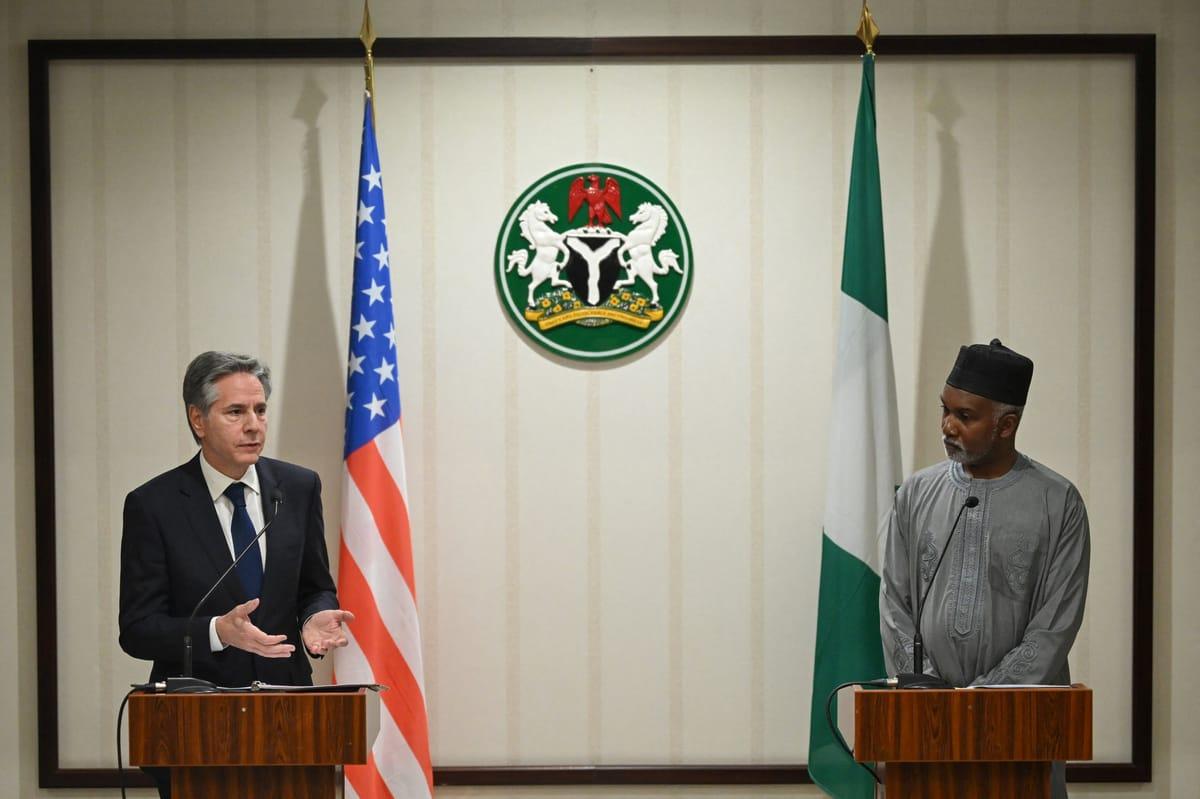
US Urges Caution for American Firms Investing in Nigeria Amidst Security, Graft Concerns
Full Story
The United States Department of State has flagged insecurity, widespread corruption, port inefficiencies, and regulatory uncertainties as significant hurdles for foreign investment in Nigeria. This assessment comes despite indications of an improving macroeconomic environment within the country.
In its 2026 Investment Climate Statements concerning Nigeria, the US department noted that the nation's business climate reflects the impact of what it described as 'painful but necessary' structural reforms initiated by President Bola Tinubu's government. The report detailed that the removal of fuel subsidies and the liberalization of foreign exchange policies initially triggered substantial economic instability, although early 2026 data suggested a degree of stabilization. Nevertheless, foreign investors continue to express worries regarding security threats, administrative bottlenecks, and the societal costs arising from these reforms.
“The security environment is a primary variable which gives pause to potential investors,” the report stated. While attacks on critical oil infrastructure in the Niger Delta have decreased, oil theft and illegal bunkering remain persistent issues. Furthermore, the report highlighted that “In the North, the expansion of terr*rist and ‘bandit’ groups continues to degrade the climate for agribusiness and mining.”
The department also raised concerns about how foreign executives are treated during regulatory disputes. It specifically referenced the nearly eight-month detention of American Binance employee, Tigran Gambaryan, in 2024. “Furthermore, the use of coercive exit bans and detentions, highlighted by the high-profile nearly eight-month detention in 2024 of U.S. citizen Binance employee Tigran Gambaryan, serves as a cautionary note for foreign executives regarding the risks of aggressive regulatory friction,” the report warned, suggesting such incidents could negatively impact perceptions of Nigeria as an investment destination.
Seaport inefficiencies were identified as another major challenge, particularly for businesses involved in imports and exports. “Port inefficiency remains a significant ‘hidden tax’ on investment,” the report emphasized. Despite this, the Lekki Deep Seaport managed $9.6 billion in trade in 2025 while operating at 50 percent capacity, thereby alleviating some pressure on older port facilities. However, cargo dwell times at Apapa and Tin Can Island ports frequently exceeded 20 days due to manual inspection processes. To address this, the Nigerian government launched the first phase of the National Single Window (NSW) on March 27, 2026. This digital platform aims to integrate key agencies, including the Nigeria Customs Service, the National Agency for Food and Drug Administration and Control (NAFDAC), and the Standards Organisation of Nigeria (SON), into a unified digital workflow. The goal is to reduce cargo dwell times to under seven days and eliminate 80 percent of manual paperwork by the close of 2026.
The department acknowledged an increase in capital inflows but cautioned that this had not translated into a proportional rise in long-term investment in physical infrastructure. “Nigeria’s capital importation reached $21 billion in October 2025, a large increase from 2024,” it noted. “However, 92 percent was made up of foreign portfolio investment (‘hot money’) seeking high interest rates, while actual foreign direct investment (FDI) in physical infrastructure remained modest.” The report confirmed that Nigeria permits full foreign ownership in most sectors, subject to specific industry restrictions and licensing. It also highlighted the Nigerian Investment Promotion Commission’s One-Stop Investment Centre, which coordinates 27 government agencies to assist investors with administrative procedures.
By the end of 2024, US foreign direct investment in Nigeria reached $7.9 billion, marking a 25 percent increase from the previous year. Bilateral trade between the two nations amounted to $14.8 billion in 2025. Despite some improvements in economic indicators, the department noted that the reforms had placed considerable strain on households. “The fiscal correction came at a high social cost,” the report stated. Following the subsidy removal, petrol prices reportedly quintupled from 2023 levels, contributing to an estimated national poverty rate of 63 percent in 2025, an figure attributed to an April 2026 World Bank report.
Nigeria’s gross domestic product (GDP) growth rose from 3.3 percent in 2023 to 4.1 percent in 2024, before slightly easing to four percent in 2025. The department also cited Central Bank of Nigeria figures showing foreign exchange reserves at $50.45 billion in February 2026, described as a 13-year peak. Headline inflation reached 34.8 percent in late 2024 before dropping to 15.15 percent in December 2025, following the rebasing of the Consumer Price Index and subsequent methodological adjustments. Food inflation stood at 10.84 percent under the rebased index.
Comments
(0)0/500 · No URLs or profanity allowed
Na serious matter be this o! US don tell dem citizens to shine their eyes well well before dem carry money come invest for Naija. Insecurity and corruption don turn major red flag, plus dem even talk about how dem dey arrest foreign executives. We hope government go hear dis one and work on am, because e dey affect investor confidence.
Source: Linda Ikeji's Blog
Related Stories

Tinubu's Poverty Alleviation Drive: 700 Oyo Graduates Get Skills, 5 Million Nigerians Targeted
PETROAN Urges FG to Allocate 30% of Cheaper Fuel Supply

Delta State Alerts Public on Bogus Tax Demands, Impostor Collectors

APC Chieftain Tolu Bankole Supports Tinubu's Order for Ondo Air Crash Investigation
400,000 Farmers to Access Dry Season Financing Via BOA, AFAN Alliance