Tinubu Orders Major Tech and AI Probe: Implications for Nigerian Media
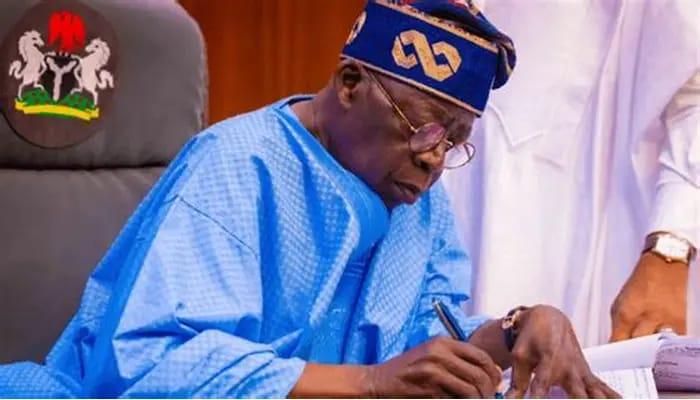
President Bola Tinubu's recent instruction to the Federal Competition and Consumer Protection Commission (FCCPC) to scrutinise leading technology firms and artificial intelligence systems has elicited varied responses from Nigerians, with some endorsing the decision while others voice apprehension. On social media platform X, Abdulmuiz Adeyemo commented, expressing concern: “Don’t tell me Tinubu wants to go after free speech; we won’t allow that.” Similarly, user @R_Zoro9119 stated, “BAT wants to go after free speech; he wants to control everything.” In contrast, @Akinwunmi praised the move, writing, “This is a massive and highly patriotic move by President Tinubu! Standing up to global tech giants like Google, Meta, and X to protect our local media industries is exactly what serious, forward-thinking leaders do worldwide. But watch how the professional doomsayers and the opposition camp will still find a way to spin this into a negative.” Against this backdrop, PUNCH Online delves into the specifics of this investigation, its potential ramifications, and lessons gleaned from international precedents.
The genesis of the probe stems from the challenges faced by Nigeria's over 100 digital news platforms. For these publishers and their staff, income is heavily reliant on online advertising, which is driven by page views and audience engagement. However, the proliferation of generative AI tools, such as ChatGPT, Google’s AI Overviews, and similar functionalities on X, has led to a significant decrease in page views and advertising revenue for many media outlets. A key grievance is that while many AI responses draw content from local media, publishers often receive no remuneration for its use. In Nigeria, digital media traffic experienced a 26.2 percent drop in 2025, falling from over 1.04 billion visits in 2024 to 769 million. Globally, publishers have reported traffic declines ranging from 15 to 40 percent in categories affected by AI, with some news sites recording even steeper drops of 30 to 40 percent or more, resulting in hundreds of millions of dollars in lost revenue and subsequent job losses.
Another persistent issue is unfair competition. African publishers, including those in Nigeria, earn considerably less revenue per mille (RPM) compared to their counterparts in Europe and the United States, a disparity attributed to platform dominance and algorithmic biases. In response to these concerns, the Nigerian Press Organisation (NPO) formally petitioned President Bola Tinubu, citing allegations of anti-competitive practices, unlawful exploitation of news content, and other potentially unfair market conduct. The NPO comprises the Newspaper Proprietors’ Association of Nigeria, the Nigeria Union of Journalists, the Broadcasting Organisations of Nigeria, and the Guild of Corporate Online Publishers. The organisation specifically highlighted its concerns regarding the operations of major technology companies, including Meta and Alphabet (Google's parent company). Consequently, President Tinubu directed the FCCPC to initiate an investigation into the matter.
**Details of the Investigation**
According to the directive conveyed to the FCCPC by the Minister of Information and National Orientation, Mohammed Idris, on Monday, the investigation is poised to usher in a new era for Nigeria’s media industry. FCCPC Executive Vice Chairman, Tunji Bello, commented, “We recognise the strategic importance of the media to Nigeria’s democracy and the equally significant role of technology in driving innovation and economic growth. Our responsibility is to objectively determine the facts and ensure that competition within the digital ecosystem remains fair, transparent, and consistent with Nigerian law.” Bello clarified that the inquiry does not presuppose any wrongdoing but rather offers an opportunity to ascertain the facts, hear from all involved parties, and assess any anti-competitive behaviour or unfair practices under the Federal Competition and Consumer Protection Act 2018. The investigation will focus on three main areas:
1. **Market Dominance and Anti-Competitive Conduct:** Allegations related to these issues will be thoroughly examined.
2. **Unauthorised Content Use:** The inquiry will investigate the unauthorised extraction, scraping, ingestion, or commercial deployment of copyrighted news articles, broadcasts, and journalistic content for the purpose of training generative AI models.
3. **Lack of Equitable Commercial Engagement:** This involves claims that media organisations are denied fair compensation or opportunities to negotiate commercial terms.
**Significance of the Probe**
This investigation holds the potential to safeguard local journalism, which is crucial for upholding democracy, ensuring accountability, and facilitating access to information. A robust and sustainable media industry fosters employment, reduces reliance on foreign narratives, and promotes diverse local content amidst the pervasive influence of global technology companies. For average Nigerians, a positive outcome could translate into better-funded, higher-quality local news and potentially more transparent AI tools.
**International Precedents**
Similar inquiries have taken place globally. Following an investigation by South Africa’s Competition Commission, Google agreed to a settlement of approximately $40 million (R688 million) to support local news media. This agreement aims to address reduced visibility and monetisation opportunities, with funds disbursed over several years to bolster content production, AI innovation, and the digital transformation of smaller publishers. In January 2026, European Union lawmakers called for AI providers to compensate for the use of copyrighted European content, advocating for transparency, fair remuneration for creators, and greater control for the news media industry over AI training data. In May 2026, Meta faced a legal setback in Europe when the EU’s highest court upheld an Italian ruling demanding compensation for publishers over the use of news article snippets, thereby affirming publishers’ rights to fair remuneration. In the UK, news organisations including the BBC, Financial Times, The Guardian, Sky News, and The Telegraph formed the SPUR coalition in early 2026 to negotiate equitable AI licensing agreements and establish standards for content usage. The coalition also champions sustainable business models to ensure the economic viability of journalism.
**Potential Outcomes for Nigeria**
The FCCPC investigation could pave the way for Nigerian media organisations to negotiate fair compensation or other commercial arrangements for the use of their journalistic content. If successful, this probe could generate new revenue streams for local media, strengthen copyright protection for AI training data, and foster a more balanced digital ecosystem. PUNCH reached out to both Google and Meta for comments regarding the FCCPC’s announcement. Representatives from both companies acknowledged the inquiries, stating they would escalate them internally and provide a response. However, no substantive response had been received at the time of this report's filing.
Comments
(0)0/500 · No URLs or profanity allowed
Dis Tinubu government don carry eye go meet big tech companies like Google and Meta o! Dem say make dem probe how dem dey use Nigerian media content without paying. Na serious matter be dis for our local journalists wey dey lose money. We hope say dis one no go just be noise, but go truly bring better compensation and fair play for everybody.
Source: Punch NG
Related Stories

Federal High Court Puts Off Ruling on Afreximbank, Times Multimedia IP Case Until 2026

FG's Galaxy Backbone Eyes Financial Institutions Amidst CBN Data Residency Mandate
Microsoft Sheds 4,800 Roles, Xbox Division Heavily Impacted

Oyo State Partners Dangote Foundation to Feed 30,000 Vulnerable Citizens

Ondo Community Begs First Bank to Reopen Seven-Year-Old Shuttered Branch