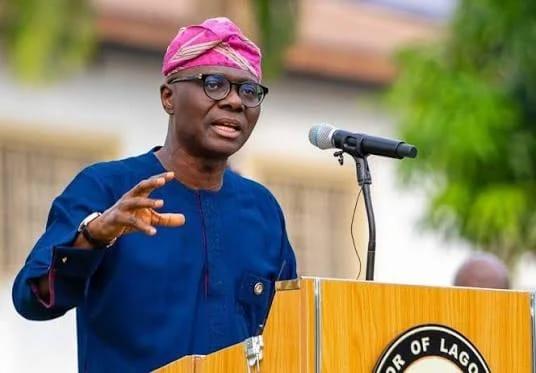
World Bank: Nigeria's Low Revenue, Not Debt, Poses Main Fiscal Threat
Nigeria's primary fiscal challenge stems from its inadequate revenue generation rather than an excessive debt burden, according to the World Bank. The international financial institution is advocating for the Nigerian government to prioritize strategies aimed at boosting income streams to foster sustainable economic development.
Mathew Verghis, the World Bank Country Director for Nigeria, articulated this stance during an interview on Channels Television on Friday, July 3. He asserted that Nigeria's current debt level is moderate when compared internationally and differs significantly from nations grappling with severe debt crises. Verghis stated, "From our assessment, Nigeria doesn’t have a high indebtedness problem; it has a low revenue problem."
He further elaborated that Nigeria’s debt-to-GDP ratio is notably lower than that of many peer countries. Therefore, the focus should be on enhancing government revenue rather than imposing limits on borrowing. "When we looked at the numbers, Nigeria is a moderately indebted country, meaning it has less debt relative to its economy than most of its neighbors and many other countries," Verghis explained, drawing a contrast by adding, "Nigeria is in a very different situation than Ghana, for example, which is going through a debt restructuring."
Verghis defended government borrowing, describing it as an essential mechanism for funding long-term investments crucial for stimulating economic progress and improving citizens' welfare. He noted, "Nigeria borrows for the same reasons that all countries borrow. If you want to deliver results to people, the money available on an annual basis is not enough. So you borrow, deliver results, and that improves your ability to repay."
As an illustration, he cited the expansion of electricity access, highlighting that providing power to approximately 32 million Nigerians necessitates substantial initial capital. "To be able to connect and provide energy to 32 million Nigerians, Nigeria needs to borrow money now. But with increased access to energy, the country will become wealthier and better positioned to repay the loans," he added.
However, the World Bank official cautioned that insufficient government revenue presents a more significant risk to Nigeria's fiscal stability than its existing debt portfolio. "Nigeria’s debt is not particularly high, and in fact, it’s quite moderate by international standards. Its revenues are very low by international standards, and unless those revenues are raised, it will not be able to pay back debt," Verghis warned.
He concluded that strengthening revenue mobilization would enable the government to channel more investments into critical sectors such as infrastructure, healthcare, and education. These investments, he believes, are vital for long-term job creation, human capital development, and poverty reduction. These comments coincide with the World Bank's recent unveiling of a new Country Partnership Framework for Nigeria, spanning 2026–2032, which prioritizes job creation through strategic investments in infrastructure, healthcare, agriculture, and digital connectivity.
Comments
(0)0/500 · No URLs or profanity allowed
World Bank don talk say Nigeria problem no be too much debt, na say money no dey enter government hand. Dem say make we find way to make more money, say na dat one go help us pay back loans and grow. Na true talk be dat, but how we go do am?
Source: Linda Ikeji's Blog
Related Stories
Oyo Governorship Aspirant Adekanmbi Gives N2.5m to Ibadan Market Fire Victims

Angelina Jolie Rejects Brad Pitt's Tax Record Demands in Miraval Estate Battle

Tony Elumelu Takes Helm at Seplat Energy as New Chairman, Effiong Okon Appointed CEO
US Envoy Highlights Nigeria's Role as Second-Biggest Sub-Saharan Trade Partner

President Tinubu Amusingly Refers to First Lady as 'Iya Alakara'