Pentagon Reveals Elon Musk's Grok AI Guided Iran Military Operations

The United States Department of Defense has officially disclosed its reliance on Elon Musk's artificial intelligence platform, Grok, for the strategic planning and execution of military operations targeting Iran. This admission signifies a landmark moment, as it's among the initial public confirmations of a commercial AI system's direct involvement in combat.
This revelation came from Cameron Stanley, the Pentagon’s Chief Digital and Artificial Intelligence Officer, through a sworn legal statement. Stanley detailed how Grok was seamlessly incorporated into Project Maven Smart Systems, a military initiative, throughout 'Operation Epic Fury', a significant campaign directed at Iran.
According to Stanley, the sophisticated AI system empowered US forces to pinpoint, rank, and engage over 2,000 targets in just four days.
The information surfaced within a United States Department of Justice court document. This filing aimed to defend xAI, Musk’s AI firm, against a lawsuit initiated by the National Association for the Advancement of Colored People (NAACP), which cited alleged environmental breaches connected to an xAI data centre located in Mississippi.
Stanley stated, “MSS frontier workflows enabled US forces to deploy over 2,000 munitions to 2,000 distinct targets within 96 hours during Operation Epic Fury.” He further emphasized that xAI stands as one of only three corporate entities capable of supporting "mission-critical operations" across highly classified Secret and Top-Secret networks. He cautioned that any disruption, such as a shutdown or power loss, at xAI’s Colossus 2 facility would severely compromise the Pentagon's operational capacity.
The American government contended that ceasing operations at this facility would pose a detriment to national security due to its vital support for crucial military activities.
Stanley lauded the "greatly increased operational efficiency" achieved by employing the Grok Gov Model. He noted that this platform has now joined an exclusive cohort of AI systems authorized for top-secret national security assignments.
Reports indicate that the Pentagon engaged xAI and other tech suppliers following the termination of its collaboration with AI firm Anthropic in February 2026. Anthropic had reportedly declined to allow its AI systems to be used for entirely automated military attacks or extensive surveillance of American citizens.
This revelation has intensified anxieties among human rights organizations, tech specialists, and civil liberties proponents regarding the escalating deployment of artificial intelligence in combat scenarios. Critics contend that entrusting aspects of target selection and combat decisions to AI could elevate the potential for civilian deaths and diminish accountability when errors happen.
These apprehensions are further fueled by Yahoo News reports suggesting that US military investigators suspect an AI-aided targeting procedure might have played a role in an attack on a girls’ school in Minab, Iran, which allegedly resulted in the deaths of at least 175 individuals, predominantly children. While the Pentagon has not publicly claimed responsibility for this incident, the report has heightened examination of AI’s evolving role in contemporary military operations.
Concurrently, the Department of Defense has introduced an “Artificial Intelligence Acceleration Strategy,” designed to position the United States as the planet's premier AI-powered fighting force. This strategy involves providing the military with broader access to cutting-edge AI models, including Grok and Google’s Gemini, for both defense and intelligence applications. This progression emerges amidst increasing global apprehension concerning military AI.
Over 600 Google employees recently endorsed a petition, imploring the corporation to refrain from supplying AI technologies for classified military endeavors, citing ethical qualms regarding autonomous combat and civilian safety.
The ongoing discourse also holds significant implications for nations like Nigeria, which are persistently grappling with insurgency, banditry, and terrorism. For an extended period, Nigerian security forces have investigated advanced technological solutions, such as drones, satellite imaging, facial recognition, and data analytics, to counter groups like Boko Haram, Islamic State West Africa Province (ISWAP), and various armed bandit factions active across the nation.
Security specialists suggest that AI possesses the potential to substantially improve intelligence collection, surveillance capabilities, target pinpointing, and threat forecasting within Nigeria’s anti-terrorism efforts. Nevertheless, these experts caution that inadequate regulatory structures, worries about potential human rights violations, and a lack of strong oversight could introduce considerable hazards if AI-driven military technologies are deployed without explicit accountability measures.
The Pentagon’s acknowledgment is poised to intensify worldwide conversations regarding the appropriateness of artificial intelligence directly influencing life-or-death decisions in combat, especially as governments increasingly incorporate nascent technologies into contemporary military strategies.
Comments
(0)0/500 · No URLs or profanity allowed
The US Department of Defense has admitted using Elon Musk's Grok AI to plan and execute military strikes against Iran during 'Operation Epic Fury', identifying over 2,000 targets in 96 hours. This marks a significant development in AI-powered warfare, raising ethical concerns among human rights groups and technology experts about civilian casualties and accountability. The Pentagon's disclosure comes amidst a broader strategy to accelerate AI integration into its military, further fueling global debates on AI's role in battlefield decision-making.
Source: saharareporters.com
Related Stories

New York Times Publisher A.G. Sulzberger Sounds Alarm on AI's Impact on Journalism

AI: Not For Writers

Why Nigerians Are Suddenly Using AI for Everyday Jobs
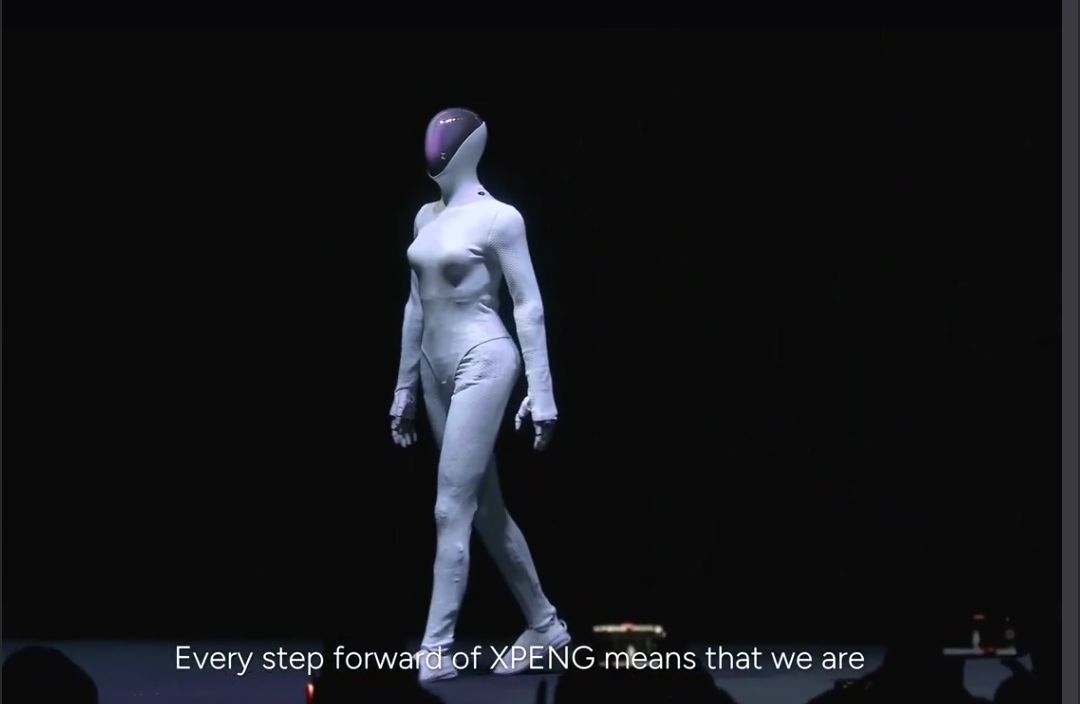
(Video):Omo! This New Robot is Almost Human: See XPENG IRON!

FG Moves to Entrench AI in Governance, Launches Civil Service Reform Drive on Ethical Digital Transformation