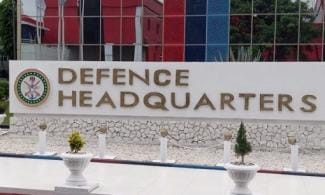
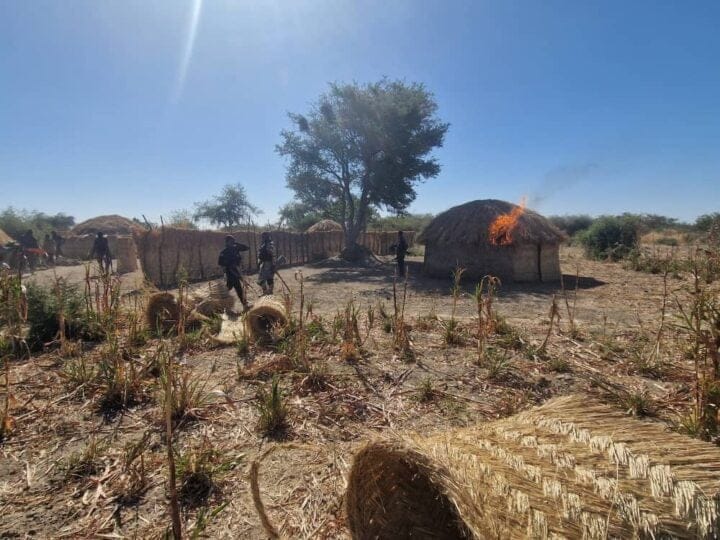
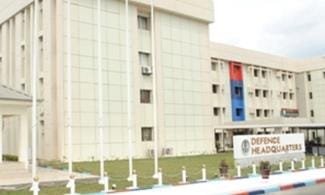
The Defence Headquarters (DHQ) has clarified public confusion surrounding the reported killing of terrorist commander Abu-Bilal Al-Minuki, explaining that ISWAP and Boko Haram routinely use identical names and aliases. This practice is part of their indoctrination, designed to obscure identities and complicate intelligence gathering efforts. Despite the name similarities, the DHQ insists the recently neutralised Al-Minuki was a senior global operative with direct links to international terrorism, a claim backed by intelligence.
The Defence Headquarters (DHQ) Abuja has issued a clarification following public confusion surrounding the reported neutralisation of a terrorist commander identified as Abu-Bilal Al-Minuki during a joint military operation conducted with the United States Africa Command on May 16, 2026.
In a statement signed by Major General Samaila Uba, Director of Defence Information, the military said the clarification became necessary after media reports drew comparisons between the latest operation and a similar counter-terrorism strike in 2024 in which a commander bearing the same name was reportedly killed.
According to the DHQ, the recurrence of such names among insurgent groups operating in Nigeria’s North-East and across the Lake Chad Basin is not unusual.
The military high command explained that members of terrorist organisations such as the Islamic State West Africa Province (ISWAP) and Boko Haram frequently adopt similar aliases and nom de guerres as part of their operational culture and indoctrination methods.
The statement noted that the practice is designed to conceal real identities and complicate intelligence gathering efforts by security agencies.
“The use of similar or identical names, aliases and nom de guerres is common among ISWAP and Boko Haram terrorists,” the DHQ said.
“This is essentially part of their indoctrination programme which is aimed at deliberately obscuring identities.”
Despite the similarities in names, the military insisted that the individual killed in the latest operation had been conclusively identified through intelligence operations.
The DHQ disclosed that the Abu-Bilal Al-Minuki neutralised on May 16, 2026, was confirmed through both human intelligence and technical surveillance to be a senior global operative within the Islamic State network. The military further alleged that he maintained direct links to international terrorist coordination, financing operations, and militant activities across the Sahel region.
“There is therefore no ambiguity in his identity,” the statement stressed.
Military authorities described the operation as a major breakthrough in ongoing counter-terrorism efforts in Nigeria and the wider Lake Chad region. The strike also underscores continued military cooperation between Nigeria and the United States in combating extremist networks operating across West Africa.
The Armed Forces of Nigeria reaffirmed their commitment to dismantling terrorist organisations and disrupting transnational extremist activities through sustained intelligence-led operations and international collaboration.
SaharaReporters earlier reported that the President Bola Tinubu-led Nigerian government also defended the reported killing of Abu-Bilal Al-Manuki — also known as Abu-Mainok or Abu-Bilal Al-Minuki — saying the operation was the result of months of coordinated intelligence work and should not be dismissed as speculation.
The Special Adviser to the President on Information and Strategy, Bayo Onanuga, reacted to growing scepticism surrounding the reported elimination of the insurgent leader in a post on X, describing the controversy as “needless” and driven by a misunderstanding of modern counterterrorism operations.
Onanuga had said criticism of the operation reflects a gap between public perception and operational realities.
“The needless controversy trailing the reported elimination of Abu-Bilal Al-Manuki… has once again exposed the gulf between the public sceptics and the realities of modern counterterrorism operations,” he wrote.
He said security sources confirmed that earlier claims linking Al-Manuki to operations in the Birnin Gwari axis of Kaduna State in 2024 were based on misidentification during ongoing counterinsurgency operations.
According to him, intelligence officials now believe the earlier attribution was incorrect and unrelated to the commander’s actual operational network.
He added that the latest operation was based on prolonged intelligence gathering, including surveillance, communications monitoring, and phone intercepts reportedly beginning from December 2025.
The presidential aide said the target had been under sustained tracking across several locations in northern Nigeria, including Abuja and Maiduguri.
The Defence Headquarters (DHQ) has clarified public confusion surrounding the reported killing of terrorist commander Abu-Bilal Al-Minuki, explaining that ISWAP and Boko Haram routinely use identical names and aliases. This practice is part of their indoctrination, designed to obscure identities and complicate intelligence gathering efforts. Despite the name similarities, the DHQ insists the recently neutralised Al-Minuki was a senior global operative with direct links to international terrorism, a claim backed by intelligence.
Source: saharareporters.com