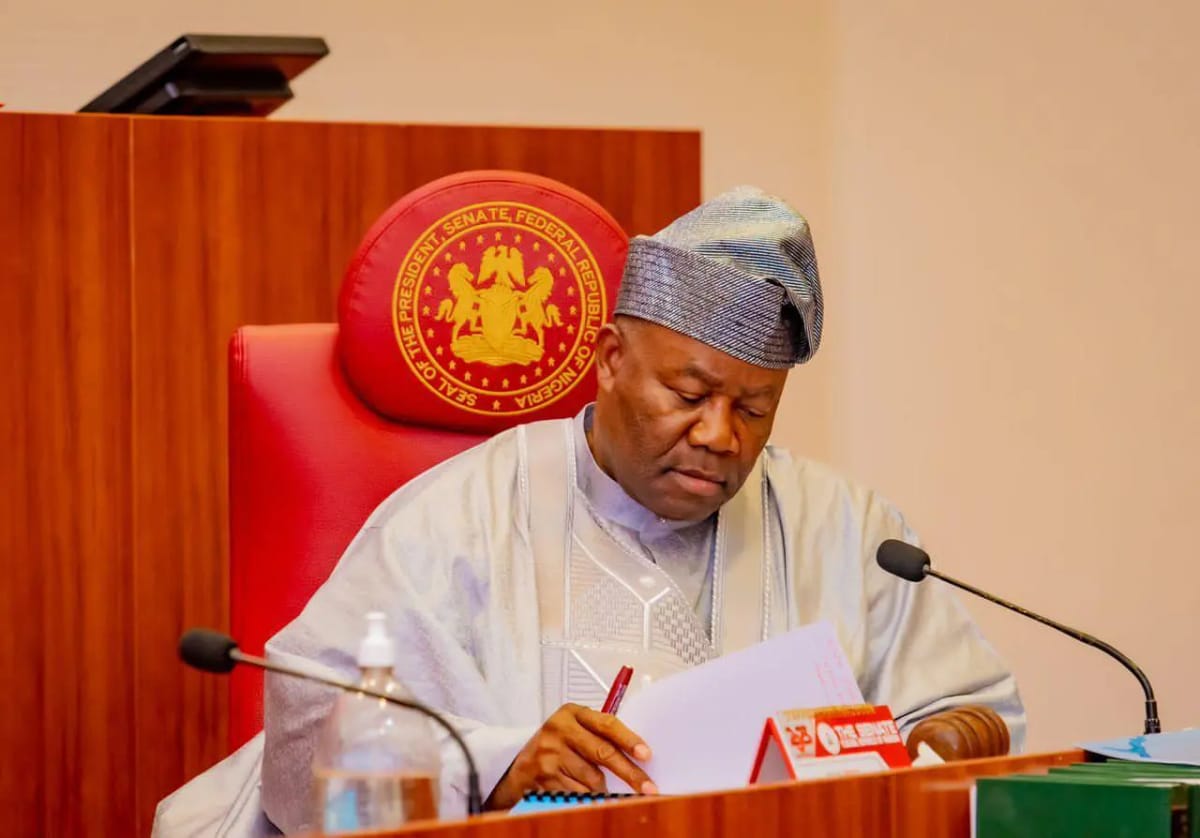
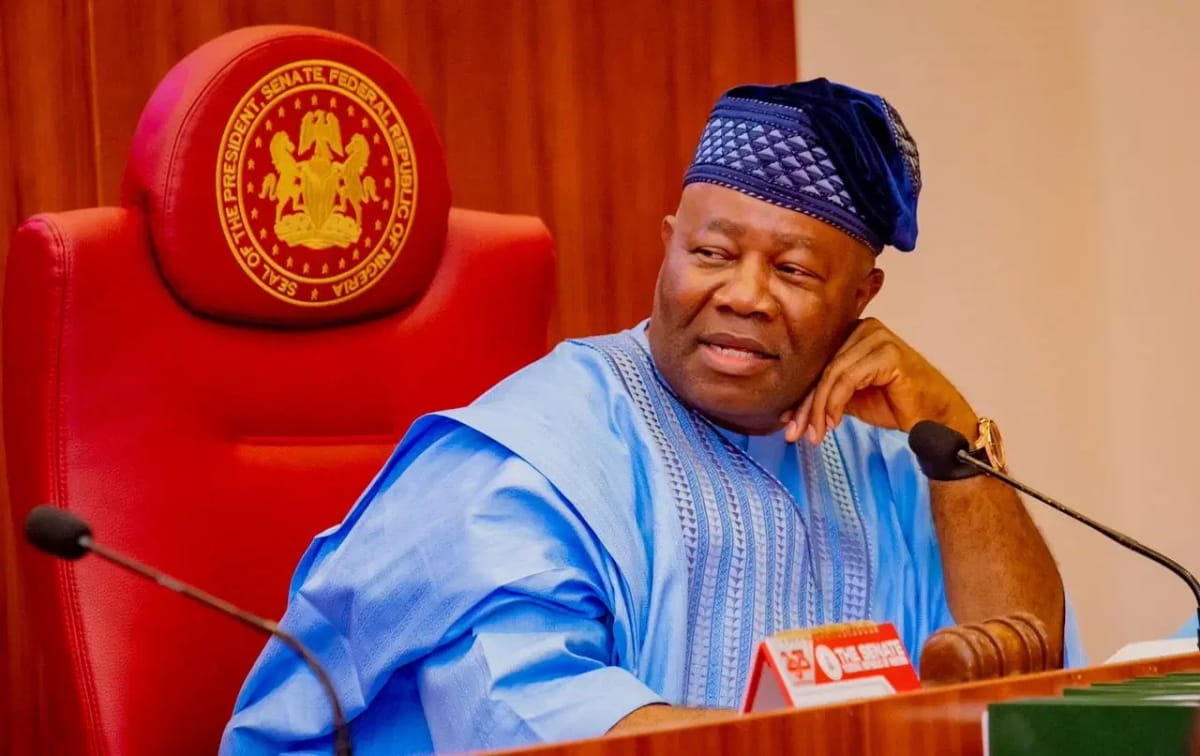
Nigeria's Senate President, Godswill Akpabio, has declared that Nigeria will not resort to economic retaliation against South Africa despite ongoing xenophobic attacks on its citizens, opting instead for diplomatic solutions. The Senate plans to establish a joint ad hoc committee for a fact-finding mission to South Africa, aiming to address the crisis and formally express Nigeria's displeasure.
Xenophobia attacks: Nigeria won’t invoke economic retaliation against South Africa – Akpabio.
Nigeria’s Senate President, Godswill Obot Akpabio, has said that Nigeria will not invoke economic retaliation against South despite the persistent xenophobic attacks against her citizens.
Rather, he said that diplomatic engagement in resolving the crisis would be the best options in the best interest of the two countries.
Specifically, the Senate President noted that economic retaliation against businesses would not be the preferred course of action.
Akpabio made this known while responding to the proposal by Senator Adams Oshiomhole that revocation of operational licenses of South African companies such as MTN and DSTV in Nigeria should be invoked against South Africa in retaliation to the xenophobic attacks.
Oshiomhole’s proposal was declined on procedural grounds.
Akpabio asserted that the Senate views the reported attacks as serious and will address the matter with the urgency it deserves.
However, the Senate has finally resolved to constitute a joint ad hoc committee of the Senate and the House of Representatives to address the rising cases of xenophobic attacks against Nigerians in South Africa.
The committee, to be led by the Chairman of the National Assembly, will undertake a fact-finding and diplomatic visit to South Africa aimed at finding lasting solutions to the crisis.
As part of its mandate, the delegation is expected to visit the South African Parliament to formally express Nigeria’s strong displeasure over the reported attacks.
The Senate also plans to write to the Speaker of the South African Parliament, as well as invite the Minister of Foreign Affairs to brief lawmakers on the outcomes of their engagements.
The upper chamber also upheld a resolution by Senator Simon Lalong calling for a review of resolutions reached during a 2019 bilateral meeting between Nigeria and South Africa, with a view to ensuring their implementation.
The resolutions followed a motion of urgent national importance raised by Senator Bassey, titled: “Intensifying Xenophobic Persecution of Nigerians in South Africa and Ghana: A Call for Urgent National, Diplomatic and Humanitarian Action to Defend the Dignity, Safety and Honour of Nigerian Citizens.”
During deliberations, lawmakers were divided over whether to step down the motion for closed-door discussion after Senator Adamu Aliero called for it to be debated behind closed doors.
This was immediately countered by Senator Abdul Ningi, who, alongside others, insisted on open deliberation.
Lawmakers expressed deep concern over not only the physical attacks but also the growing climate of fear, psychological trauma, and dehumanization faced by Nigerians abroad.
They noted that many Nigerians are increasingly being profiled and targeted solely based on their nationality.
The Senate subsequently observed a minute of silence in honour of Nigerians who have lost their lives in the attacks in South Africa.