Education2 May 20262:17
Lagos Demolitions Force Children Out of School: 'Our Priority Is Shelter, Not Education'
Recent demolitions in Lagos communities like Otumara and Baba Ijora have led to a silent crisis, forcing children out of school and into child labour as they prioritize finding shelter. This displacement contradicts initiatives like Lagos Project Zero, highlighting a looming generational risk of educational exclusion and deepened urban poverty. Public and private schools were also destroyed, leaving many students like 15-year-old Chinonso Nwibo to hawk on the streets instead of pursuing their education.
Buried in the rubble of demolished buildings in Lagos communities of Otumara and Baba Ijora is a more dangerous consequence: the silent expansion of Lagos’ out-of-school population. The situation underscores a looming generational risk, where displacement today could become a long-term educational exclusion, child labour, and deepened urban poverty and insecurity. It is a sharp contradiction to the Lagos Project Zero initiative, GBENGA SALAU reports.
Chinonso Nwibo, 15 years old, now hawks puff puff on the streets of Lagos during school hours. Yet his dream is to study engineering after completing his secondary education. But that aspiration has been cut short, even if temporarily, following the demolition of his parents’ house in Otumara, Lagos Mainland, on March 7, 2025.
Due to the demolition, he could not return to his Ilogbo Junior Secondary School, Ebute Metta, after abruptly terminating his learning to run home to see whatever items he could rescue from his mother’s room.
“When the news got to our school that the government had started demolishing houses, there was nobody at home as my mother left home early that day for the market. So, I felt that if I did not go home to pick some of my clothes and other items, they would either be crushed along with the building or would be stolen by the area boys,” Chinonso, a Junior Secondary School 2 pupil, stated.
Since then, he has not returned to school, thereby joining the growing list of out-of-school children in Lagos State. His school, though government-owned, would also later be demolished.
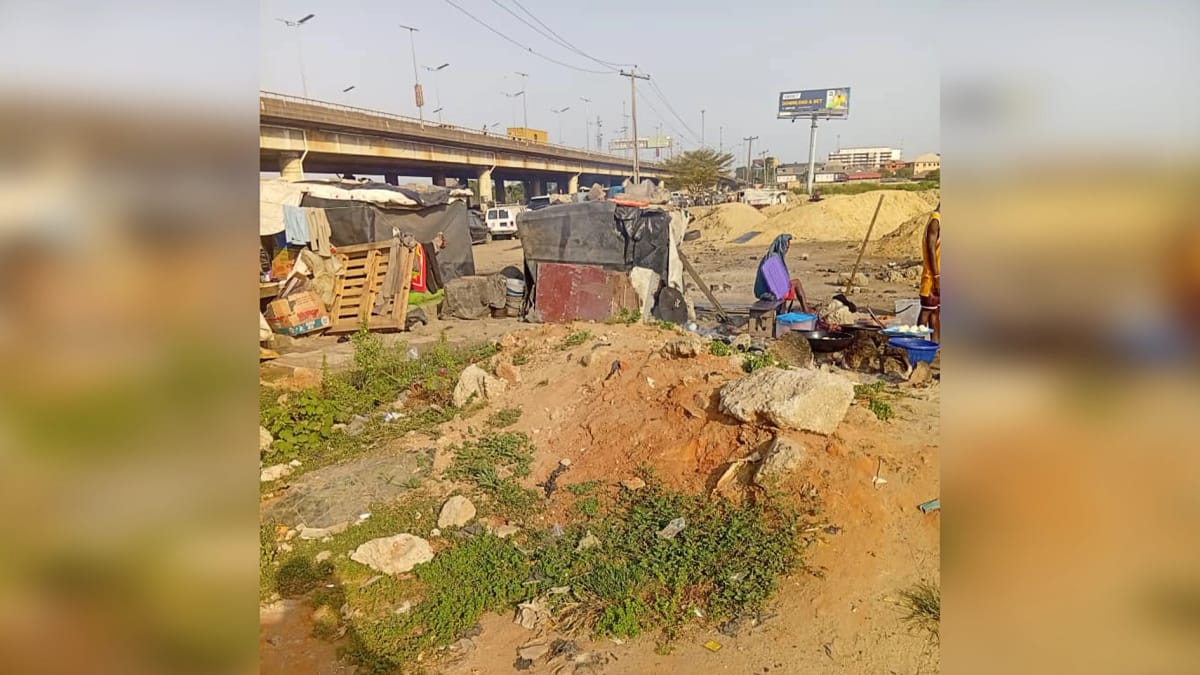
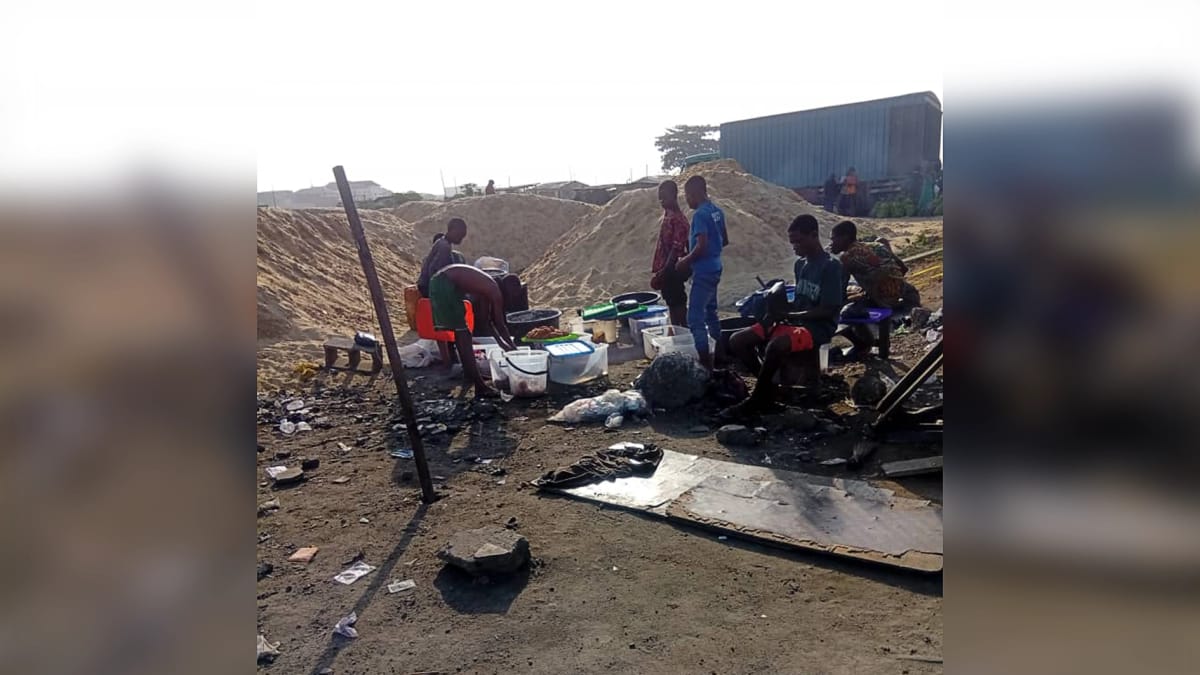
Chinonso now also sleeps in a makeshift structure he puts together within the Otumara open field without a father or mother by his side. This is because days after the eviction exercise, his mother mooted the idea of returning to their roots in the southeast, but he insisted on staying back to work and earn a living for himself. He has since taken to hawking fully.
According to him, after the demolition of his school, his schoolmates were transferred to Iponri Secondary School. He, however, did not resume with others because he needed to make money to meet his daily needs.
Chinonso, who was spotted assisting a man frying puff puff when this reporter visited him, said after finishing his task, he would still go to hawk the product. Since his mother has relocated to the village, he must work for his survival.
When asked if he was not planning to return to school, he said, “Education will rest for now”.
Apart from Chinoso’s school, two other public schools –Ebenezer Nursery and Primary School and Banjo Nursery and Primary School – were also demolished.
A resident, Akeem Abayomi, claimed that the three public schools had no defects, but were only demolished because evictees relocated to the schools for temporary shelter after their houses were pulled down. He added that one of the school structures demolished was a newly constructed 18-classroom block.
It is disheartening to note that the public schools were not the only learning institutions in Otumara and Baba Ijora that were pulled down. There were other privately owned schools. They include Amazing Grace Nursery and Primary School, Ayilara Precious Nursery and Primary School, Amanda Nursery and Primary School, Heritage Nursery and Primary School, Aunty Joy Nursery and Primary School, Aunty Bisi Nursery and Primary School, and Danny’s Esther Nursery and Primary School.
What happened in Otumara and its adjoining communities is painted in the recently launched Lagos City Report by African Cities Research Consortium (ACRC), edited by Taibat Lawanson, Lindsay Sawyer and Damilola Olalekan. The report (www.african-cities.org) noted that, “While there remains a rhetoric of people-centred governance, for instance with the establishment of an office for the Sustainable Development Goals (SDGs), the state government takes at best a sporadic benevolence approach to vulnerable groups, rather than implementing structural changes and catalytic developments.”
The report also observed that, for instance, the Ministry of Waterfront Development works to eradicate informal waterfront communities such as Oworo and Makoko, Lagos State Urban Renewal Agency (LASURA) works to implement informal settlement upgrading. “The overriding neoliberal agenda of urban development is at odds with the need for pro-poor planning and the existence of widespread informality.”
This buttressed the evictees’ statement that, as at the time their buildings were demolished, LASURA was already engaging them on urban renewal for the community.
Faith said she felt really bad that their house and her school were demolished. On why she has not resumed school, since pupils from her school, a government owned, were transferred to another school, she said her parents asked her to discontinue schooling for now until they get an accommodation.
For her mother, “Of what good is going to school at this time, considering our living conditions?” She also told her daughter to stop speaking with the reporter.
Similarly, Abdullahi Abdusomod, a Junior Secondary School 3 of Aunty Bisi Secondary School, has not returned to school after the demolition exercise in March 2025. He disclosed that after the demolition exercise, his family relocated to Ogun State, but returned to Otumara after meeting daily needs became a big problem in their new location. “So, we had to return here as we do not want to continue to cause discomfort to our host.” He disclosed that he has not returned to school because his mother said there are no funds to enroll him in another school, as he was attending a private school.
His mother, Olaide, said the main concern for her is how to get money to eat and then get enough to relocate from the under-bridge where they are presently squatting to rent a decent apartment elsewhere. Olaide said that it is the reason she asked her son to accompany her to hawk the breakable plates she sells.
“I try to make him feel that this is temporary so that he would not resort to hooliganism or illegal activities. Since we do not have enough money to send him back to school after I lost a huge part of my business capital to the eviction crisis, I have asked him to assist me. I do not want to leave him at home because an idle mind is the devil’s workshop,” Olaide said.
Abdusomod is also optimistic that he will one day return to school to continue his education. “I really felt pained when our school was destroyed, but nothing we can do since it is the government.”
Amori Akintunde, a Junior Secondary School 3 student at Okesuna Junior Secondary School, Lagos Island, left home excited on the first day demolition started in Otumara in March 2025. While in school, she never knew what had befallen her and her elder sister, staying with their grandmother as orphans. But she returned home to see that the house she had left in the morning had become rubble.
And since then, she, her elder sister, who just completed secondary school education and her grandmother have been living in the open and recently in a makeshift structure put together with disused planks and roofing sheets.
According to her, she did not return to school the next day the demolition started in her community because it was a tough defining moment for her and her grandmother, who works as a cleaner in one of the local councils in Lagos Island. She claimed she managed to complete her JSS 3, but she has dropped out of school, although she hopes to return to school in January 2027.
There is also Osinachi Nwogbala, an eight-year-old Nursery 2 pupil of Amanda Nursery and Primary School. He has also not returned to school since Otumara was demolished. He now babysits the last child of the family, who is about a year old, when his father goes to work, and his mother goes to hawk. When Osinachi was asked how he feels about not going to school again, he said, “Body no dey sweet me,” adding, “I am not happy that my school was demolished and that I have not been going to school. We were in school when the buildings were being demolished, and we were rushed out of the school building.”
His father, Prosper, said he was paying N16,000 as school fees for Osinachi and N15,000 for his immediate younger sister, Ada, before their school was demolished just like their home. According to him, after the demolition incident, which led to their forceful eviction from their home, his wife and his four children relocated to the village, while he stayed back living in the open space in Otumara and later in a mini makeshift structure in the open field before moving to live under a bridge.
He further said that his wife, however, returned to Lagos with their first child, Osinachi, and the lastborn, who is about a year old. According to him, when he and his wife go to work and hawk respectively, Osinachi watch over the baby.
On why Osinachi has not returned to school since he is back in Lagos, Prosper said: “What we are thinking now is how to eat and move out of this place. We are not happy staying here because we do not have peace of mind residing here due to the way some of the people dwelling here behave. So, that is why we have not considered returning Osinachi to school. And we are praying that we should not stay too long here before we get another accommodation because this is not befitting.”
One of the privately owned schools demolished is Ayilara Precious Nursery and Primary School. It is, however, a unique private school as it is a no-fee paying school, the pupils also enjoy free textbooks, uniform and bags. As of the time the school was demolished, it had about 70 registered pupils in Kindergarten 1 to primary 6, with six teachers and a cleaner employed to attend to them.
The school’s head teacher, Kudirat Sunmonu, said the school was demolished on a Friday, and the pupils were in class when she was instructed to move them out of the school building. She said she rallied other teachers to evacuate them, revealing that as soon as they were moved out, the caterpillar roared over the house, turning it into rubble within minutes.
She disclosed that as a no-fee paying school, it relied on good Samaritans to cater for the funding of its activities. “We have a major funder who provides the support to ensure the children enjoy free textbooks, uniforms, and bags, including paying the salaries of staff, teaching and non-teaching.”
“He pays all the teachers, aside from paying for the rent of the building we use as classrooms, as well as the school activities.”
The head teacher said she has relocated to Sagamu, Ogun State, following the demolition exercise, noting that she lost her phone during the travails, and as a result, lost the contacts of the families of the pupils. “I have no contact with any of the pupils and their parents again. Except if someone who knows me calls me, that is when I recollect their phone numbers for now.”
Meanwhile, the ACRC report, however, noted that forced evictions were previously carried out by the government on the rationale that these areas are not safe from flooding, but this has increased poverty through loss of housing and livelihoods. This is a fact, as forced evictions had been carried out in Otodo Gbame, Oworonsoki, and Makoko, among others.
And, in its report, ACRC observed that there is a limited supply of affordable new housing. “The Lagos newbuild housing sector is bifurcated between producers in the formal sector and those in the informal sector. The share of formal housing production in Lagos is low, at 25 per cent, compared to the informal at 75 per cent.”
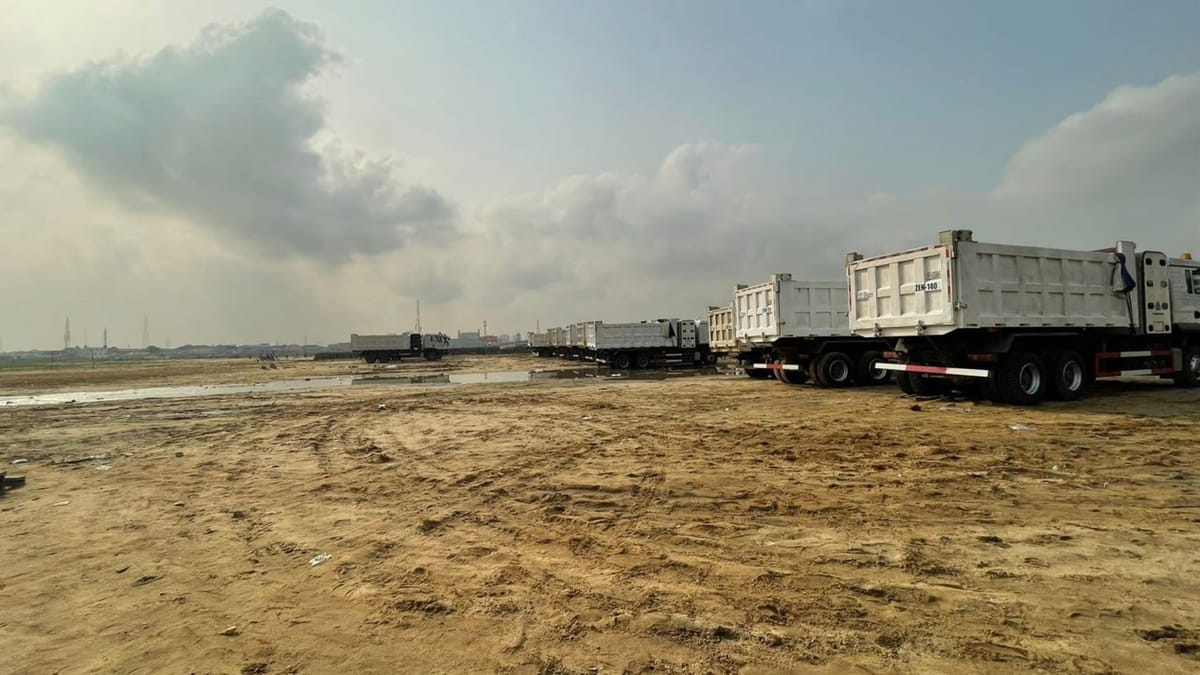
Surprisingly, Otumara and Baba Ijora’s land has a new owner, Breeze Luxury Homes Limited, which has started advertising a plot of land for N200 million. It plans to site Metro Estate on the land. But a perusal of the facilities to be provided in the new estate advertised on its website showed there is no plan to accommodate schools.
The real estate firm said, “Metro View Estate is a slum transformed into a city within a city between Lagos Island and the mainland. It is located at Ijora-Olopa, Eko Bridge/Costain, Lagos State. It has easy access to companies and industries within Apapa, Idumota, CMS, Lagos Island, Bony Camp, Ikoyi, Lekki Phase and others. It has both commercial and residential areas. It is sitting above 65 hectares of land. Its size is measured at 600 sqm per plot. It will be one of the most secure estates in Lagos State with modern security apparatus. It is not just an estate but a tourist hub where nature embraces luxury residence.”
The company listed the features and amenities to be available in the estate to include Swimming Pool, fitness centre, garage, generator set, gated estate, central water supply, well-paved roads, stamped concrete floors, multiple water tanks, cinema room, home office, smart home system, water purifier system, access control gates, borehole, street lighting, landscaping and green area, automated gate, gym, ample parking, inverter and solar power, luxury sanitary wares, 24/7 electricity, good drainage system, recreational facilities, electric fence and waste disposal system.
The taking over of Otumara land by a private estate firm aligns with one of the submissions in the ACRC report, which stated that: “The political economy of Lagos is characterised by godfatherism and wealth distribution through personal networks.”
Worthy to mention is that Lagos State Government has a Project Zero initiative that works to ensure no child is left out of school. The Project Zero programme was launched by the Lagos State Government through the Lagos State Universal Basic Education Board (LASUBEB) in 2020 in response to the growing challenge of out-of-school children in the state shortly after the COVID-19 pandemic.
It was introduced to discover, track, and reintegrate pupils who dropped out of school, including preventing future dropouts by addressing the challenges that keep children away from school. It did this through community outreach, school-based monitoring, and collaboration with critical stakeholders like teachers, School-Based Management Committees (SBMCs), parents’ associations, and the private sector.
But as a result of the demolition in Otumara and other communities, many school-aged children are now roaming the streets. A perusal of the data being dished out by government officials around Project Zero showed clear inconsistencies.
While about 13,000 children were said to have returned to school by April 2024, the Commissioner for Basic Education, Tolani Alli-Balogun, later claimed 30,000 were reintegrated between 2024 and April 2025. However, a LASUBEB official in June 2025 stated that only about 17,000 children had been returned since the programme began in 2020.
In an interaction with a journalist in June 2025, the LASUBEB Social Mobilisation Officer, Mrs. Adeyemi Omoyemi Omotunde, commenting on the gains of the Project Zero intervention, said that Lagos State had over 500,000 out-of-school children before the launching of the project, and over 17,000 of these children have returned to school and were provided with basic school kits as a result of the initiative.
Also, Lagos State Governor, Mr. Babajide Sanwo-Olu, in August 2025, at the 27th quarterly meeting of the Universal Basic Education Commission (UBEC) Management with Executive Chairmen of State Universal Basic Education Boards (SUBEBs), themed “Bridging the Gap between Planning and Performance towards Achieving Quality Basic Education,” stated that basic education forms the foundation of all achievements, insisting that preventing children from attending school must be considered illegal.
Sanwo-Olu at the meeting reaffirmed his administration’s commitment to reducing the number of out-of-school children, emphasising that education must remain the cornerstone of human development and national progress.
Commenting on the state government not having a concrete plan for the pupils in private schools before and after the demolition exercise despite its Project Zero, Co-founder, Rethinking Cities, Deji Akinpelu, said that he has seen this play out before, noting that after the demolition of Otodo Gbame in Lekki, many children were forced to relocate with their families to the inner parts of Ikorodu.
“In that process, a lot of them dropped out of school entirely. Education was disrupted, and for some, it never resumed. This violates both Nigeria’s Child Rights Act and international commitments to continuous access to education. When demolitions happen without proper resettlement and education plans, children are the ones who pay the highest price. For me, the issue is simple: development that pushes children out of school is not progress, it is a setback.”
He added that a child is a child regardless of the type of school they attend, stating that many families in low-income communities make enormous sacrifices to send their children to affordable private schools, not out of luxury, but out of necessity, often because public systems are overstretched or inaccessible.
“So, when demolitions happen, and there is no plan for those children, what we are effectively saying is that some children matter less. That is not just a policy gap; it is a moral failure. It undermines the credibility of any inclusive education agenda and exposes a disconnect between policy rhetoric and lived reality.”
Also commenting, a psychologist, Dr Johnson Ibidapo, said that the greatest sufferers of this demolition are children.
“There will be psycho-social hazards, including emotional issues. There is also the possibility of the children developing post-traumatic stress disorder, and many of them will probably drop out of school and could suffer challenges like sexual abuse.
“Many of them will have traumatised childhoods, which of course will make them problematic adults and become abusers after being abused as a child. It may increase the school dropout rate, and when there are many more out-of-school children, we have irresponsible adults who become touts, street urchins, and there will be increased insecurity.” Ibidapo argued that it is a matter that the government really needs to look into by resettling those displaced, particularly children.
“Those attending private schools, the government should do more to re-enrol them into public schools so that they can continue their education, considering it has a programme that is called Project Zero, that no child should be left out of school,” Ibidapo stated.
Also commenting, Lagos In-City Urban Development Research Lead, African Cities Research Consortium (ACRC), Dr Olumuyiwa Adegun, said education is critical to inclusive and sustainable urban development. He noted that it is one of the societal domains that affect all citizens, especially their quality of life, noting that integrating educational infrastructure into urban planning enhances city competitiveness, fosters communal stability and reduces social inequality.
“Demolishing public educational infrastructure as part of evictions in the name of urban regeneration clearly contradicts the vision to ‘transform Lagos into a model megacity. Clearing informal settlements and evicting the residents leaves the educational pursuits of the children in jeopardy. The children are affected because they will be unable to return to school.
“Schools built with government resources should not be removed or relocated for private real estate development. Not only is taxpayer money invested in such educational infrastructure wasted, but the land also becomes private property, only delivering profit to personal purses. This is not how to cater for school-age children, who constitute over 35 per cent of Lagos’ population. It goes against the grain of Lagos Project Zero, which seeks to reduce the number of out-of-school children.”
Adegun said that Lagos can learn from the failure of others. “Studying the long-term effects of the slum clearance programme implemented in Santiago (Chile) between 1979 and 1985, Fernanda Ampuero compared displaced and non-displaced children and their parents 20 to 40 years afterwards. He confirmed the negative effects on children and families with displaced children, having 10% lower earnings and 0.5 fewer years of education than non-displaced children. Moreover, parents of displaced children are more likely to die after the clearance intervention.”
It was therefore not surprising that ACRC in its report submitted that: “System functioning in Lagos is characterised by inadequate and/or inefficient coverage, access and quality that puts strain on citizens and relies on the variable capacities of non-state actors and residents themselves. The inability of government at all levels to deliver adequate public services is both a defining characteristic of the city’s systems and a considerable source of tension between government itself, with private service providers and with citizens.”
Attempts to get the Lagos State Government to speak on some of the issues were not successful. The Education Secretary of Lagos State Mainland Local Council was contacted for the number of pupils in the schools demolished, especially the three government-owned ones, and the number of children who have returned to school. He said it is classified information that he cannot make available unless he gets a directive.
As a result, the Commissioner for Basic and Secondary Education, Mr. Jamiu Tolani Alli-Balogun, was contacted on the phone. After he was briefed, he said he could not attend to the issues on the phone and that he would prefer a physical interaction. He said he attends to such issues on Tuesdays and Thursdays. Being a Tuesday, the reporter headed to his office. After his secretary was briefed, she asked the reporter to fill a form, which she took to him, but she returned with the instruction that the reporter should go to the public affairs unit of the ministry.
When the reporter got to the public affairs unit, he met one Mr. Elias, who was briefed. Elias said he would need to meet the Commissioner for proper directives, only for him to return that he was told that the Commissioner had gone out as he was heading to his office.
Elias, however, asked that the reporter drop the questions with him for the Commissioner to respond to, which was complied with. A day after, the commissioner was called to remind him that the questions had been dropped with the public affairs unit officer, for his response. He acknowledged with the assurance that responses would be provided. Also, Elias was called repeatedly for three days consecutively; he did not pick his calls. However, neither the commissioner nor the public affairs unit officer has responded to the questions to date.
The Lagos State Universal Basic Education Board which has responsibility for implementing the Project Zero was thereafter contacted. Initially, the PRO of the agency, Mrs Adunola Abe asked that questions be shared with her, which was complied with. She however got back later that she could not respond to the questions except a letter is sent to the Chairman of LASUBEB on it. This was also done and shared with her but yet to respond as of press time.
Similarly, attempts to get the Lagos State Building Control Agency (LASBCA) to speak to why the government-owned schools were demolished were not successful. The GM of the agency, Florence Omolola Gbaye did not pick calls. The PRO of LASBCA Ademuyiwa Adu denied that his agency was involved when he was contacted. But when the PRO of Lagos State Urban Renewal Agency (LASURA), Adedeji Akolade was called, he claimed that his agency deals with urban renewal plans and that LASBCA is responsible for demolition.
The PRO of LASURA, however, refused to comment on whether the urban renewal plans it had for Otumara and Baba Ijora also demanded that the schools be demolished. Indeed, it has become a case of many questions and no answer!
naijapodnews@gmail.com
Play the News, Don't Read It
Tap to listen to this story
0:000:00
Share this story
Gallery
Comments
(0)0/500 · No URLs or profanity allowed